California Wrongful Termination Damages: How Emotional Distress Is Evaluated
FEHA / EEO Defense

A California wrongful termination claim can expose an employer to several categories of damages, but the available remedies depend on the legal claims involved. Back pay and other economic losses can often be supported with payroll and employment records. Emotional distress is different: California law does not provide a fixed formula for converting that harm into a dollar amount.
For FEHA claims in particular, non-economic damages are not subject to a statutory dollar cap. Juries instead evaluate the nature, extent, and duration of the harm based on the evidence presented.
For employers, that makes the damages analysis more than a question of lost wages. The strength of the termination record, the employee's mitigation efforts, any after-acquired evidence, and the evidence supporting emotional distress can all materially affect exposure.
Key Takeaways
California's FEHA places no cap on emotional distress damages, unlike federal law, which caps certain compensatory and punitive awards based on employer size.
CACI gives jurors a framework for evaluating emotional distress, but California law provides no fixed formula for converting that harm into a dollar amount.
Punitive damages require clear and convincing evidence of oppression, fraud, or malice, a higher standard than the underlying claim itself.
The employee's duty to mitigate can reduce or eliminate future front pay and back pay if comparable work was available and the employee did not pursue it.
Under Salas v. Sierra Chemical Co. (2014), after-acquired evidence limits remedies by capping back pay and barring reinstatement from the discovery date forward, but it is not a complete defense to the underlying claim.
Contemporaneous documentation is among the most important evidence supporting an employer's defense.
Is There a Cap on Emotional Distress Damages Under FEHA?
No fixed statutory dollar cap applies to emotional distress damages under FEHA. California's FEHA permits compensatory damages for proven harm, including non-economic harm, without imposing the type of employer-size-based cap found in Title VII.
Unlike federal employment discrimination law, which caps certain compensatory and punitive damages based on employer size, California's FEHA imposes no ceiling on non-economic damages. A jury can award any amount it finds supported by the evidence, which is why emotional distress figures in California wrongful termination verdicts vary so widely from one case to the next.
How Do California Juries Evaluate Emotional Distress?
California Civil Jury Instructions (CACI) direct jurors to consider the nature, extent, and duration of the emotional harm the employee experienced, but that instruction is a framework for judgment. In practice, juries weigh several concrete factors:
The credibility of the employee's own testimony about how the termination affected them
Corroborating evidence like medical records, therapy records, or testimony from family and coworkers who observed the impact
How significantly the termination disrupted daily functioning: sleep, relationships, ability to work elsewhere
The circumstances surrounding the termination, including evidence of humiliation, indignity, or other conduct that increased the employee's emotional harm, may affect the amount awarded.
Expert testimony is not automatically required. Depending on the claim, an employee's own testimony and testimony from people who observed the employee's condition may support an emotional distress award. Expert testimony may become important when the alleged harm involves a psychological or psychiatric condition beyond ordinary experience.
When Can Punitive Damages Apply?
Punitive damages require clear and convincing evidence of oppression, fraud, or malice. In an employment case, evidence about what decision-makers knew, what they intended, whether unlawful conduct was authorized or ratified, and whether the conduct reflected more than an isolated mistake can matter in the punitive-damages analysis.
A single, well-documented, isolated termination decision, even an ultimately incorrect one, looks very different to a jury than a termination preceded by a documented history of similar treatment toward other employees.
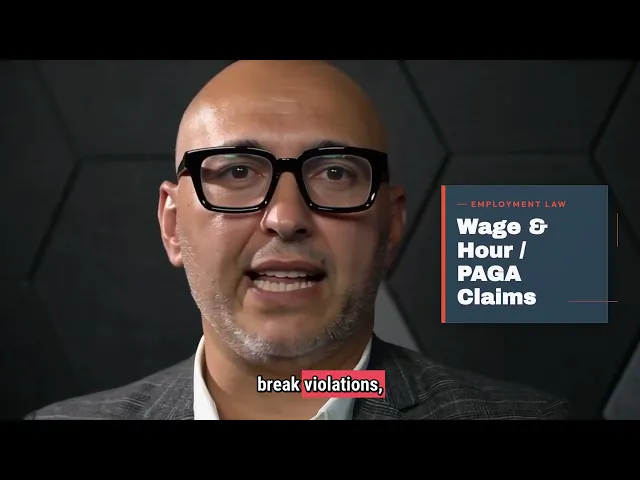
Watch: The Most Common Employment Lawsuits California Employers Face (And How to Avoid Them) - John Fagerholm walks through the claim types California employers encounter most often, including where wrongful termination claims typically originate.
What Reduces the Damages a Business Owes?
Several factors genuinely narrow exposure, and understanding them changes how you build your defense:
1.
Employee's duty to mitigate.
California law requires a terminated employee to make reasonable efforts to find comparable work. Evidence that comparable positions were available and the employee didn't pursue them can meaningfully reduce or cut off front pay and back pay going forward.
2.
After-acquired evidence, precisely applied.
If, after a termination, an employer discovers information that would independently have justified the decision, like misrepresented credentials or undisclosed misconduct.
Here's the precise holding, since it's often overstated: after-acquired evidence is not a complete defense under FEHA. It doesn't erase liability for what happened before the discovery. It limits the remedy by barring reinstatement and front pay and capping back pay at the date the employer actually learned of the disqualifying information. The underlying claim survives, but the value changes.
3.
Mixed-motive evidence.
Mixed-motive cases require more than showing that the employer had a legitimate reason for the termination. Under Harris v. City of Santa Monica, an FEHA plaintiff must show that unlawful discrimination was a substantial motivating factor in the employment decision. If the employer proves it would have made the same decision even without the unlawful motive, that same-decision showing can bar an award of damages, back pay, and reinstatement. However, other forms of relief may remain available.
For employers, the practical question is therefore not simply whether a legitimate reason existed. The record should show that the legitimate reason actually motivated the decision at the time it was made and that the same decision would have occurred absent the alleged unlawful consideration.
What Does Defending a Wrongful Termination Claim Involve?
Beyond narrowing damages, several defenses go to liability itself:
Documented, legitimate business reasons. Contemporaneous records like written warnings, performance reviews, and documented policy violations carry far more evidentiary weight than an explanation developed after a claim is filed. This is the single most consistently effective defense available.
Consistent application across similarly situated employees. If you didn't terminate other employees with comparable performance issues, that inconsistency undermines a legitimate-reason defense. Our guide on defending a retaliation claim after a wage complaint covers these patterns.
Arbitration agreements, where validly executed, can shift the case away from a jury altogether. This depends heavily on current case law on enforceability, which has shifted significantly this year. Our guide on Fuentes v. Empire Nissan and arbitration agreement enforceability covers how courts are scrutinizing these agreements right now.
If harassment, discrimination, or retaliation allegations are part of the underlying claim, our FEHA / EEO Defense team builds the fact record separating the lawful business decision from the protected activity the employee alleges drove it.
What Does Defending a Wrongful Termination Claim Cost?
Defense costs vary substantially based on the claims asserted, the amount of discovery, the number of witnesses, the complexity of the damages evidence, and whether the case proceeds toward trial.
A relatively contained dispute may involve limited discovery and early settlement discussions. A case involving multiple claims, extensive electronic evidence, expert testimony, or a jury trial can require substantially more defense work.
For employers, the more useful question is not a generic dollar estimate. It is whether the underlying documentation supports an early assessment of liability, damages, and settlement value before unnecessary discovery and motion practice increase the dispute's cost.
Should an Employer Settle or Litigate?
The decision generally turns on three factors:
Factor | May support earlier resolution | May support continued litigation |
|---|---|---|
Documentation | Incomplete, inconsistent, or reconstructed | Strong contemporaneous records |
Emotional distress | Substantial corroborating evidence | Limited or disputed evidence |
Liability evidence | Significant factual disputes or adverse documents | Strong evidence supporting the stated reason |
Comparator evidence | Inconsistent treatment | Consistent treatment of comparable employees |
Damages | Significant claimed losses with supporting evidence | Damages appear limited or highly disputed |
Litigation posture | High discovery burden or multiple overlapping claims | Narrow issues that can be efficiently litigated |
Whether to settle or litigate is ultimately a fact-specific assessment of liability, damages, litigation cost, insurance coverage, business considerations, and the strength of the evidence on both sides.
What Employers Are Asking About Wrongful Termination Risk
The practical employer question is often not "What is wrongful termination?" It is: How do I terminate an employee when I have legitimate performance or conduct concerns without creating unnecessary legal exposure?
That concern appears repeatedly in employer and HR discussions on Reddit.
In a July 2026 r/smallbusiness discussion, a California business owner dealing with performance and timekeeping issues asked:

The post is not legal advice, but it reflects a recurring employer-side concern: the decision to terminate may appear straightforward internally while the employer is simultaneously considering what the employee has complained about, what has been documented, and whether the timing creates additional risk.
A separate discussion in r/humanresources came from an HR professional who described the anxiety surrounding termination threats and asked:

The HR professional specifically described maintaining a documentation trail before termination.
These discussions are not substitutes for California law or legal advice. They do, however, highlight the employer-side questions that matter before a termination:
What legitimate reason is actually driving the decision?
Was that reason documented before the termination?
Has the employee recently made a complaint or engaged in protected activity?
Have similarly situated employees been treated consistently?
Does the personnel file support the explanation the employer will later give?
Are there separate wage, leave, disability, discrimination, or retaliation issues that could overlap with the termination?
For employers, the goal is not to create paperwork simply because litigation might happen. The goal is to ensure the business record accurately reflects how and why the employment decision was made.
How Can Your Business Reduce This Risk Before a Claim Arrives?
Document performance issues in real time, not retroactively. This is the foundation every other defense depends on.
Apply written policies consistently across employees in comparable situations.
Conduct termination meetings with a witness present, and record the stated reason contemporaneously.
Preserve records of job market conditions relevant to the terminated employee's role, which can later serve as evidence supporting a mitigation-based reduction if needed.
Review any pending termination against your documentation before finalizing it. If the paper trail doesn't already support the decision, close that gap before the decision.
Wrongful termination claims rarely arrive alone. A single termination often creates overlapping exposure, including retaliation, wage disputes over final pay, and more. Our guide on wrongful termination exposure after an ICE workplace visit covers one specific version of this compounding pattern.
Additionally, waiting time penalties under Labor Code §203 are worth checking if the termination involved any delay in final pay, since that's an independent penalty that stacks on top of whatever wrongful termination damages are already in play.
Conclusion
California's FEHA places no cap on emotional distress damages, and juries determine that figure using CACI's subjective framework rather than any fixed formula, which is exactly why these claims are so unpredictable at trial and so frequently resolve through settlement instead. Genuine damage reducers exist. Contemporaneous documentation determines both your liability exposure and your damages exposure, since it shapes every available defense.
If your business has received a wrongful termination claim, DefendMyBiz offers a free 15-minute consultation. Book a call with our employer defense team today.
Frequently Asked Questions
Is there a cap on emotional distress damages in a California wrongful termination case?
How do juries calculate emotional distress damages if there's no formula?
Does after-acquired evidence completely bar a wrongful termination claim?
What reduces the damages an employer has to pay in a wrongful termination case?
When do punitive damages become a real risk in these cases?
Disclaimer: The above content is for informational purposes only. This is not legal or tax advice. Laws, IRS guidance, and withholding requirements can change, and outcomes depend on specific facts. You are advised to contact a qualified attorney for any legal advice.