California Race Discrimination Claims: What Is the Employer's Burden of Proof?
FEHA / EEO Defense

When an employee accuses a California employer of race discrimination, one of the first questions is often: Who has to prove what?
The answer depends on the type of claim and the stage of the case. Under FEHA, the employee generally bears the ultimate burden of proving that race was a substantial motivating reason for the challenged employment action. The employer, however, may have important burdens of its own. First, to produce a legitimate, nondiscriminatory reason for the decision and, in certain circumstances, to prove an affirmative defense, such as the Harris same-decision defense or business necessity, in a disparate-impact case.
Those distinctions matter. A legitimate reason is not the same thing as a same-decision defense, and a facially neutral policy can still create disparate-impact exposure. This guide explains what California employers must prove, what employees must establish, and which records can make the difference.
Key Takeaways
The employee bears the ultimate burden under FEHA, while the employer generally bears only a burden of production.
Race need only be a "substantial motivating factor," so a legitimate reason alone may not end a case.
The same-decision defense is the employer's burden. It limits remedies but doesn't eliminate liability or attorney's fees.
For disparate impact, the employer must show a practice is job-related and consistent with business necessity.
A single racial slur can be actionable harassment, and race includes hair texture and protective hairstyles.
What Is the Employer's Burden of Proof in a California Race Discrimination Lawsuit?
In a California FEHA race-discrimination claim, the employee generally bears the ultimate burden of proving that race was a substantial motivating factor in the challenged employment decision. The employer's burden depends on the stage of the case and the theory of discrimination.
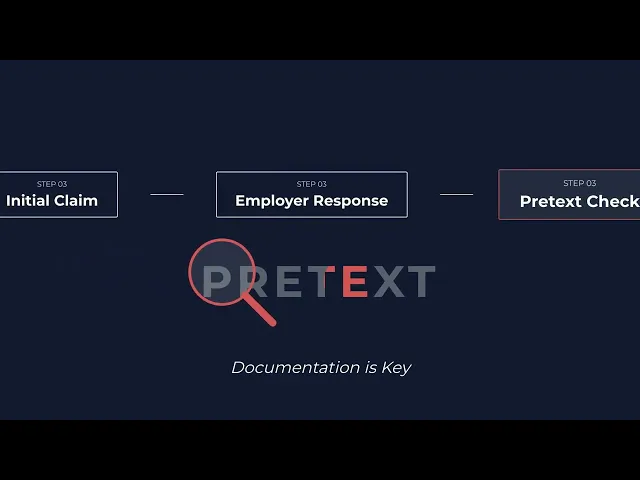
Under the familiar McDonnell Douglas framework, an employee may establish a prima facie case of discrimination. The employer then has a burden of production to articulate a legitimate, nondiscriminatory reason for the decision. If the employer does so, the initial presumption of discrimination drops out and the employee may attempt to show that the stated reason was pretextual or that discriminatory bias nevertheless substantially motivated the decision. Guz v. Bechtel National, Inc. (2000) 24 Cal.4th 317 explains this framework.
The important distinction for employers is that producing a legitimate reason does not necessarily win the case. The ultimate question remains whether the evidence supports a finding that race was a substantial motivating factor in the decision.
Issue | Who Bears the Burden? | What Must Be Shown? |
|---|---|---|
Initial discrimination showing | Employee | Evidence supporting an inference of discriminatory treatment |
Legitimate, nondiscriminatory reason | Employer | A legitimate reason for the challenged action |
Pretext or discriminatory motivation | Employee | Evidence that the stated reason is pretextual or that race substantially motivated the decision |
Same-decision defense | Employer | By a preponderance of the evidence, the employer would have made the same decision without discrimination |
Disparate-impact business necessity | Employer | The challenged practice is job-related/necessary to the safe and efficient operation of the business and substantially fulfills that purpose |
The last two rows are affirmative defenses or defense frameworks with their own requirements. They should not be confused with the employer's ordinary burden to produce a legitimate reason in a disparate-treatment case.
What Does "Substantial Motivating Factor" Mean, and Why Doesn't a Legitimate Reason End the Case?
In Harris v. City of Santa Monica (2013) 56 Cal.4th 203, the California Supreme Court held that race need not be the only reason, or even the "but for" cause. It must be a substantial motivating factor. That's why offering a legitimate reason doesn't end the case. If the employee shows discrimination was a substantial factor, you're exposed even if other lawful factors also played a part.
The same-decision defense then limits the damage rather than the liability:
You carry the burden. You must prove you would have made the same decision at the time, absent any discrimination, not that it could have been justified later.
It limits remedies, not liability. If proven, it can preclude damages, back pay, and reinstatement.
Some exposure remains. The employee may still obtain declaratory or injunctive relief and reasonable attorney's fees.
Contemporaneous documentation is what makes a same-decision showing believable. Our wrongful termination defense guide includes a pre-termination checklist built around that principle.
What Evidence Do Race Discrimination Claims Turn On?
Employee's Typical Evidence | What Answers It |
|---|---|
Similarly situated employees treated differently for comparable conduct | Documented consistent standards across comparable employees |
Comments referencing race | Prompt investigation and context for the decision-maker's statements |
Timing close to a complaint or event | Records showing the decision was already in motion |
Departures from your own policy | Written policy followed, with documented reasons for any exceptions |
Shifting or inconsistent explanations | One reason, recorded at the time |
The pattern is the same throughout: written records that predate the dispute defeat the pretext argument far more reliably than explanations offered afterward.
Watch: Employee Claims Discrimination? Here's How California Employers Should Respond: a practical overview of the first steps to take when a discrimination allegation arrives.
Does a Single Racial Comment Create a Hostile Work Environment Claim?
It can. In Bailey v. San Francisco District Attorney's Office (2024) 16 Cal.5th 611, the California Supreme Court reaffirmed that a single racial epithet can be actionable harassment under FEHA when it is sufficiently severe under the totality of the circumstances.
Treat any report of a racial slur as a complaint requiring prompt investigation, not as a stray remark to be weighed later. Race under FEHA also covers traits historically associated with race, including hair texture and protective hairstyles (the CROWN Act), so grooming policies deserve the same scrutiny.
Can a Neutral Policy Be Race Discrimination?
Yes, under disparate impact, and here the burden shifts to you. Once a plaintiff establishes a disparate impact from a facially neutral employment practice, the employer can defend the practice by proving business necessity.
Under California's FEHA framework, the employer must show that the practice serves an overriding legitimate business purpose, is necessary to the safe and efficient operation of the business, and substantially accomplishes that purpose. A plaintiff may still prevail by identifying an alternative practice that would serve the business purpose equally well with less discriminatory impact.
Practices that commonly draw disparate-impact challenges:
Criminal-history screening. See our guide on the Fair Chance Act and a $93K settlement.
Automated hiring tools. See our guide to California's AI hiring regulations under FEHA and how to protect attorney-client privilege over a bias audit.
Grooming and appearance rules, and tests or minimum qualifications not tied to the job.
Can White or Other "Majority-Group" Employees Bring Race Discrimination Claims?
Yes, on the same terms. FEHA prohibits discrimination because of race with no majority-group carve-out. On the federal side, Ames v. Ohio Department of Youth Services (U.S. June 5, 2025) unanimously rejected the "background circumstances" rule that some circuits had used to require majority-group plaintiffs to present additional evidence.
The practical effect is that decisions touching diversity initiatives, such as promotions, hiring preferences, or race-restricted programs, get the same scrutiny as any other. Document neutral, job-related criteria for every selection decision.
How Long Does an Employee Have to File, and What Is at Stake?
An employee generally has 3 years from the date of the discriminatory act to file with the CRD. FEHA damages aren't capped, and fee-shifting generally favors the employee.
Exposure Component | Notes |
|---|---|
Back pay and front pay | Calculated from payroll records |
Emotional distress | Uncapped under FEHA, with no formula |
Punitive damages | Requires clear and convincing proof of oppression, fraud, or malice |
Attorney's fees | A prevailing employee may be eligible for reasonable fees and costs, including where the employer establishes the Harris same-decision defense. |
No reliable "average settlement" exists, because values depend on the facts, the evidence, and the jurisdiction. That is why early evaluation matters.
What HR Professionals on Reddit Ask About Race Discrimination Claims
Employer-side HR discussions tend to focus on the same practical questions this article addresses: What evidence actually supports a discrimination complaint, how should HR investigate it, and how can the employer distinguish legitimate management decisions from inconsistent treatment?
In one r/humanresources discussion, an HR professional described investigating a racial discrimination complaint that could not be corroborated and raised concerns about inconsistent treatment and the complainant's own conduct.

The discussion focused on documenting the investigation, communicating the findings, and preventing retaliation afterward.
In an r/AskHR discussion focused on California, an HR-related question asked whether requiring the only Black new hire to work in the office while other new hires were permitted to work remotely could raise discrimination concerns.

The responses emphasized that the relevant details included the employees' roles, supervisors, hiring conditions, and the actual reason for the different treatment.
Employer takeaway: Race-discrimination defenses are rarely built on a single fact. They are built from consistent standards, valid comparators, contemporaneous decision records, and a documented explanation for why similarly situated employees were or were not treated differently.
What Employers Should Do When a Race Discrimination Claim Arrives
Preserve the decision record. Identify who made the decision, when it was made, and what documents existed at the time.
Identify the legal theory. Determine whether the allegation concerns disparate treatment, disparate impact, harassment, retaliation, or multiple theories.
Identify comparators. Review employees who were actually similarly situated rather than relying on superficial similarities.
Test the stated reason. Determine whether the employer's explanation is supported by contemporaneous evidence.
Check for inconsistent treatment. Review whether the same standards were applied to employees outside the protected group.
Preserve electronic evidence. Include email, Slack/Teams messages, HRIS records, performance documentation, and relevant personnel records.
Review retaliation risk. Any employment action following the complaint should be independently reviewed for legitimate reasons and timing.
Do not rewrite the decision after the claim arrives. The strongest defense is usually the record that existed at the time the decision was made.
Our guide to religious discrimination claims walks through how to respond once a CRD complaint is filed, and the same process applies to race claims.
Conclusion
In a California race discrimination lawsuit, the employee carries the ultimate burden, and the employer must only produce a legitimate reason, unless it raises the same-decision defense or the business-necessity defense to disparate impact, in which case the employer carries the burden. Race need only be a substantial motivating factor, so a legitimate reason alone doesn't end the case.
Records created at the time of the decision and applied consistently to comparable employees are the ones that carry the burdens you actually hold.
If an employee has filed a CRD complaint or EEOC charge, or an attorney has sent a demand letter, DefendMyBiz offers a free 15-minute consultation. If you'd like a legal review of your hiring criteria or grooming policies before any claim exists, that's a paid 1-hour consultation. The FEHA / EEO Defense team handles both.
Frequently Asked Questions
What is the employer's burden of proof in a race discrimination case in California?
Can you sue a company for racial discrimination in California?
What does "substantial motivating factor" mean?
Can a neutral policy be race discrimination in California?
Do white employees have the same protections as other employees?
Disclaimer: The above content is for informational purposes only. This is not legal or tax advice. Laws, IRS guidance, and withholding requirements can change, and outcomes depend on specific facts. You are advised to contact a qualified attorney for any legal advice.


