Defeating Wage and Hour Class Actions in California: An Employer's Defense Guide
Wage & Hour Defense

A wage-and-hour class action in California does not start as a class action. It starts as a single employee's complaint. The moment it gets certified, one complaint becomes a lawsuit representing every similarly situated employee over the past four years. That certification decision is where the defense is won or lost.
This guide covers how California wage-and-hour class actions are structured, what the certification process requires, where employers can stop it, and which compliance practices reduce exposure before a claim is filed.
Key Takeaways
Class certification under California Code of Civil Procedure § 382 requires the plaintiff to prove numerosity, commonality, typicality, and adequacy. Each element is challengeable.
Predominance, whether common questions outweigh individualized ones, is the most contestable and most decisive certification requirement.
A properly drafted arbitration agreement with a class action waiver can remove individual plaintiffs from class litigation, but it must be enforced immediately at the outset of the case.
California's four-year statute of limitations means exposure reaches back further than most employers expect.
Wage statement deficiencies are among the most underestimated class action triggers. A recurring error on every pay stub can create broad class exposure, especially when the same defect appears across the workforce.
Why California Produces More Wage and Hour Class Actions Than Any Other State
California routinely leads the nation in wage-and-hour class-action filings. The state's wage and hour laws provide a broader range of rights for employees than federal law does, and California's Labor Code generally allows a successful employee to recover attorneys' fees, whereas a successful employer cannot recover fees from the employee.
That fee asymmetry often drives high-value demand letters and early settlement pressure.
Plaintiffs' attorneys often litigate on a contingency basis, which can increase settlement pressure on employers. Employers pay defense costs from day one regardless of merit.
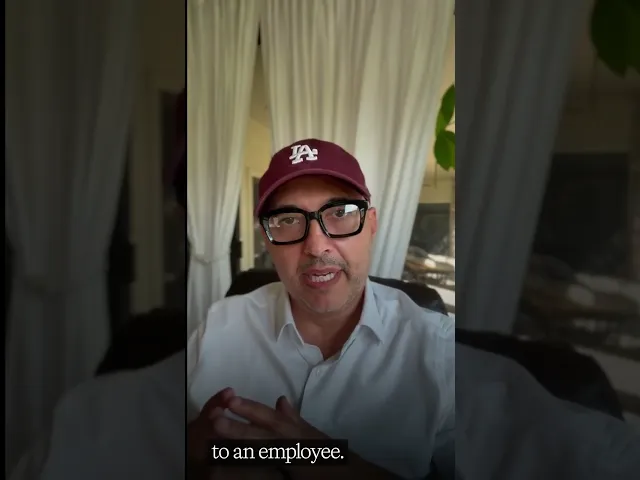
In the video “Labor Board Claims & Waiting Time Penalties Explained,” John explains how Labor Board claims and waiting-time penalties work and how quickly they can compound.
The Violations That Most Frequently Drive Class Actions
Not every wage-and-hour violation has equal class-action potential. The claims below appear most commonly because they are structurally suited to class treatment. They allege a uniform policy or practice that affected all covered employees in the same way.
Violation | Governing Law | Class Action Risk | Why It Scales |
|---|---|---|---|
Off-the-clock work | Labor Code § 510; IWC Wage Orders | High | A uniform rounding policy or auto-deduct rule affects every non-exempt employee on the same payroll system |
Meal break denial | Labor Code § 226.7 | High | One-hour premium per violation per employee; a uniform "no relief" practice creates identical claims across the class |
Rest break denial | Labor Code § 226.7 | High | Same premium structure as meal breaks; policy-level failure creates an automatic class |
Exempt misclassification | Labor Code § 515; IWC Wage Orders | High | Misclassifying an entire job category creates a ready-made class of identically situated employees |
Wage statement deficiencies | Labor Code § 226 | Very High | A uniform wage statement defect can support class treatment because the same pay-stub issue may appear across the entire workforce. |
Waiting time penalties | Labor Code § 203 | Moderate | Applies only to separated employees, but compounds rapidly at the daily rate of the employee's last wage |
The most important entry in that table is wage statement deficiencies. A missing employer legal name, incorrect pay period dates, or omitted pay rate on every pay stub generates a class equal in size to your entire workforce without any individual needing to prove actual harm.
Watch: John explains how a single dollar in unpaid wages can trigger waiting time penalties, PAGA actions, DLSE hearings, and class action exposure: How $1 Can Cost You $3,000 – Unpaid Wages in California.

What Is Class Certification, and How Does It Work?
Certification is the procedural gateway that transforms an individual claim into a class action. The plaintiff bears the burden of proving it.
The plaintiff must establish an ascertainable class and a well-defined community of interest comprising: predominant common questions of law or fact; class representatives with claims typical of the class; and class representatives who can adequately represent the class.
In this process, predominance is often the most powerful defense lever available before certification, and the employer's defense strategy should focus on it first. The certification analysis usually turns on the following defense issues.
1.
Attacking Predominance: The Core Certification Defense
Predominance fails when resolving the liability question for any single class member requires a different factual inquiry than for the others. In wage and hour litigation, that argument rests on demonstrating concrete variation across the proposed class:
Job duty variation. If employees in the proposed class performed materially different work, then whether any one of them was denied a meal break or misclassified cannot be answered with class-wide evidence. Each requires individual examination.
Manager discretion. Where the alleged violation stems from how individual managers applied (or departed from) a written policy, rather than from the policy itself, the claim does not produce common answers across the class.
Non-uniform pay structures. Employees on different commission plans, piece-rate arrangements, or multiple pay rates produce individual damages calculations that resist class treatment.
Employers can challenge predominance by showing that the core liability questions require individualized inquiries.
2.
Challenging Typicality and Adequacy
Separately from predominance, the named plaintiff must be a suitable class representative. Common vulnerabilities include:
Documented receipt of compliant meal breaks that contradict the class-wide theory
A disciplinary record that creates credibility issues distinct from those of other class members
A job title or pay structure that differs from the employees they purport to represent
These arguments require an early, thorough review of the named plaintiff's personnel file. The issues should be identified as early as possible, ideally before discovery expands.
For a detailed look at how meal and rest break claims are built and litigated in California, see California Meal and Rest Break Rules: What Every Employer Must Know.
What Happens When Both a Class Action and PAGA Are Filed Together
The vast majority of California wage-and-hour class actions include a PAGA claim. These are not the same legal mechanisms, and the defense strategy differs for each.
Aspects | Wage and Hour Class Action | PAGA Representative Action |
|---|---|---|
Governing law | CCP § 382 / Federal Rule 23 | Labor Code § 2698 et seq. |
Certification required? | Yes, the plaintiff must prove commonality, typicality, adequacy, and predominance | No, any aggrieved employee can bring on behalf of all |
Arbitration defense applicable? | Yes, for signed employees, it compels individual arbitration | Partial. Individual claims may be compelled to arbitration, but representative claims may remain in court, depending on the agreement |
Statute of limitations | 4 years (wage/hour class) | 3 years for underlying violations |
Who receives penalties? | Affected employees | 65% to LWDA and 35% to aggrieved employees. |
Penalty exposure | Back wages + statutory damages | Civil penalties per employee per pay period |
For a thorough explanation of PAGA's structure and the post-reform landscape, see PAGA Claims: California's Latest Scam Against Business Owners and the DefendMyBiz PAGA Defense service page.
Pre-Litigation Compliance: Defeating Class Action Exposure
The documentation employers have before a claim is filed determines how much leverage the plaintiff's attorney has in settlement negotiations. Clean records reduce that leverage; gaps amplify it.
1.
Audit wage statements under Labor Code § 226.
Nine items are required on every California pay stub: gross wages, net wages, total hours worked, all applicable pay rates, the inclusive dates of the pay period, the employee's name and last four digits of SSN, and the name and address of the employing legal entity. A formatting error present on every pay stub generates a class without individual injury.
2.
Review your meal and rest break records.
Can you demonstrate that compliant breaks were scheduled and available? Time records should show whether compliant meal periods were provided and whether exceptions were documented. Under California law, employers must relieve employees of all duty for compliant meal periods, even though they are not required to police how employees use that time.
3.
Audit exempt classifications annually.
California's minimum exempt salary threshold adjusts. An employee who qualified for the executive or administrative exemption two years ago may no longer qualify today. Misclassifying an entire job category creates a ready-made class. Annual classification reviews are the first line of defense.
4.
Check arbitration agreement coverage.
If you have arbitration agreements, confirm they are currently executed, signed by current employees, and contain valid class action waivers with severability clauses. Outdated agreements or unsigned employees represent gaps in your class action defense.
5.
Evaluate time-rounding policies.
California courts scrutinize rounding systems that, in practice, consistently favor the employer over the course of a pay period. If your timekeeping system rounds in a pattern that benefits the company, it is a target for a class action. Audit actual outcomes, not just stated policy.
For a step-by-step breakdown of meal and rest-break documentation requirements, see "How to Track Employee Breaks."
How DefendMyBiz Defends Employers Facing Wage and Hour Class Actions
DefendMyBiz represents employers exclusively.
When a class action complaint arrives, our first task is to separate the actual liability from the inflated demand number. Our defense strategy runs on parallel tracks from day one:
Building the certification challenge while simultaneously evaluating arbitration rights
Reconstructing the compliance record
Assessing whether the facts support aggressive defense or strategic resolution.
If the exposure is real, we say so directly. If the certification theory is weak, we challenge it early and directly.
The earlier we engage, the more options remain on the table.
See DefendMyBiz's Class Action Defense practice for what employer-only representation looks like in these cases.
Conclusion
A wage and hour class action does not have to reach trial or even certification to cost your business significantly. The economics of California employment litigation often create strong settlement pressure.
DefendMyBiz exclusively handles California wage-and-hour class-action defense for employers. If you have received a complaint, a demand letter, or a PAGA notice that appears to be building toward class claims, the time to build the defense is now.
Schedule a complimentary 15-minute consultation with DefendMyBiz to review your exposure and understand your options.
FAQs
What is the statute of limitations for a wage and hour class action in California?
Can class certification be defeated in a California wage and hour case?
Does an arbitration agreement eliminate wage and hour class action risk in California?
What makes wage statement claims particularly dangerous for class actions?
How does a PAGA claim differ from a wage and hour class action?
Disclaimer: The above content is for informational purposes only. This is not legal or tax advice. Laws, IRS guidance, and withholding requirements can change, and outcomes depend on specific facts. You are advised to contact a qualified attorney for any legal advice.