Your Employee Just Announced a Pregnancy. Here's What California Law Requires You to Do
FEHA / EEO Defense

The moment an employee announces a pregnancy, your legal obligations may begin even before leave is requested, and regardless of how long she has worked for you.
California's pregnancy leave framework is more layered than most employers realize. If you miss a requirement involving timing, benefits, reinstatement, or accommodation, you may create a discrimination or retaliation claim that is difficult to defend.
Before You Respond, Know What You're Managing
PDL applies to employers with 5 or more employees, with no minimum service or hours requirement.
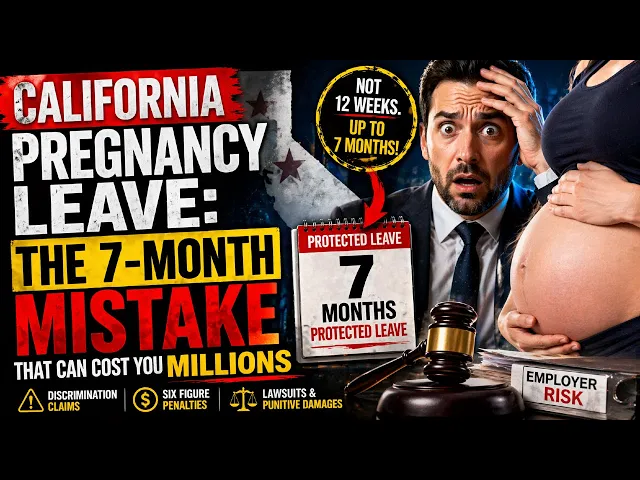
PDL and CFRA do not run concurrently. A qualifying employee can stack both for up to 7 months of consecutive protected leave.
PDL and CFRA bonding leave do not run concurrently. An eligible employee may take up to four months of PDL, followed by up to 12 weeks of CFRA bonding leave.
You must maintain group health benefits during PDL on the same terms as active employment.
Reinstatement to the same position is generally required upon return from leave, with narrow exceptions.
Terminating or demoting an employee during or shortly after pregnancy leave can create a strong pattern of retaliation.
PDL: What It Covers and What Triggers It
Pregnancy Disability Leave is governed by California Government Code § 12945, enforced by the CRD. It applies from day one of employment with no minimum tenure or hours threshold.
What triggers it:
The employee must be disabled by pregnancy, childbirth, or a related medical condition. This includes severe morning sickness, gestational diabetes, preeclampsia, postpartum depression, medically ordered bed rest, and prenatal appointments. The healthcare provider's certification drives the disability period.
Duration: Up to 4 months (17⅓ weeks) per pregnancy.
For a 40-hour/week employee, that's 693 hours of protected leave, measured per pregnancy, not per calendar year. Leave can be taken continuously, intermittently, or on a reduced schedule as medically certified. You cannot require continuous leave if intermittent leave is medically necessary.
The Leave Stack - Why 7 Months Catches Employers Off Guard
This is where most employers miscalculate their exposure.
Leave | What It Covers | Duration | Runs With |
|---|---|---|---|
PDL | Pregnancy disability | Up to 4 months/ 17⅓ weeks | FMLA (first 12 weeks, if eligible) |
CFRA (bonding) | Bonding with a new child | Up to 12 weeks | FMLA (where eligible) |
FMLA | Pregnancy as a serious health condition | Up to 12 weeks | PDL (first 12 weeks) |
The critical rule:
PDL and CFRA do not run concurrently. An employee eligible for both can take 17⅓ weeks of PDL followed immediately by 12 weeks of CFRA bonding leave. Total: approximately 7 months of consecutive protected leave.
FMLA, where it applies (50+ employees), runs concurrently with PDL for the first 12 weeks. After FMLA is exhausted, the remaining PDL continues. After PDL ends, CFRA bonding begins.
Health benefits:
You must maintain group health insurance throughout PDL at the same terms as active employment. This is a separate obligation from CFRA benefits continuation, meaning it applies through both leaves consecutively, where both apply.
Watch: John W. Fagerholm, Managing Partner of DefendMyBiz, explains the 7-Month Rule that California employers get wrong and what it costs them. Watch here →
Reinstatement: What Employers Must Do and Where Claims Start
When the PDL ends, you must reinstate the employee to the same position with the same duties, pay, benefits, and location.
A comparable position is permitted only in narrow, documented circumstances. Courts closely scrutinize restructuring or reorganization decisions that occur during or shortly after pregnancy leave.
What does not excuse reinstatement:
Her position was "hard to cover" while she was out
The replacement employee is performing well
Business slowed during her absence
The role was "eliminated" without pre-leave documentation
The one legitimate exception: a documented companywide layoff that affected other employees equally, with records showing the decision preceded the leave. Courts have rejected employers' claims of layoff justification without contemporaneous documentation.
For how protected leave intersects with retaliation claims, see: Protected Leave Litigation: Defeating Interference and Retaliation Claims →
Reasonable Accommodation During Pregnancy
PDL is not your only obligation at the pregnancy announcement. Under FEHA, you also have an affirmative duty to provide reasonable accommodation for pregnancy-related conditions before the employee is sufficiently disabled to require PDL.
Common pregnancy accommodations: modified duties, temporary reassignment, more frequent breaks, ergonomic adjustments, and schedule changes. The same interactive process requirements that govern disability accommodation apply here.
Refusing an accommodation or failing to engage the interactive process is a standalone FEHA violation separate from any leave dispute. If you're already facing interference claims, see FEHA / EEO Defense →
What Are People Saying Online
Across Reddit's r/legaladvice and r/AskHR, California employers regularly ask whether pregnancy leave, PDL, CFRA, accommodations, and termination timing give them a claim. These discussions show the exact fact patterns employers need to document carefully.
"Can I be fired after announcing I'm pregnant?"
A r/legaladvice thread involved an employee who said she was fired shortly after announcing her pregnancy and after someone was hired to cover her role.
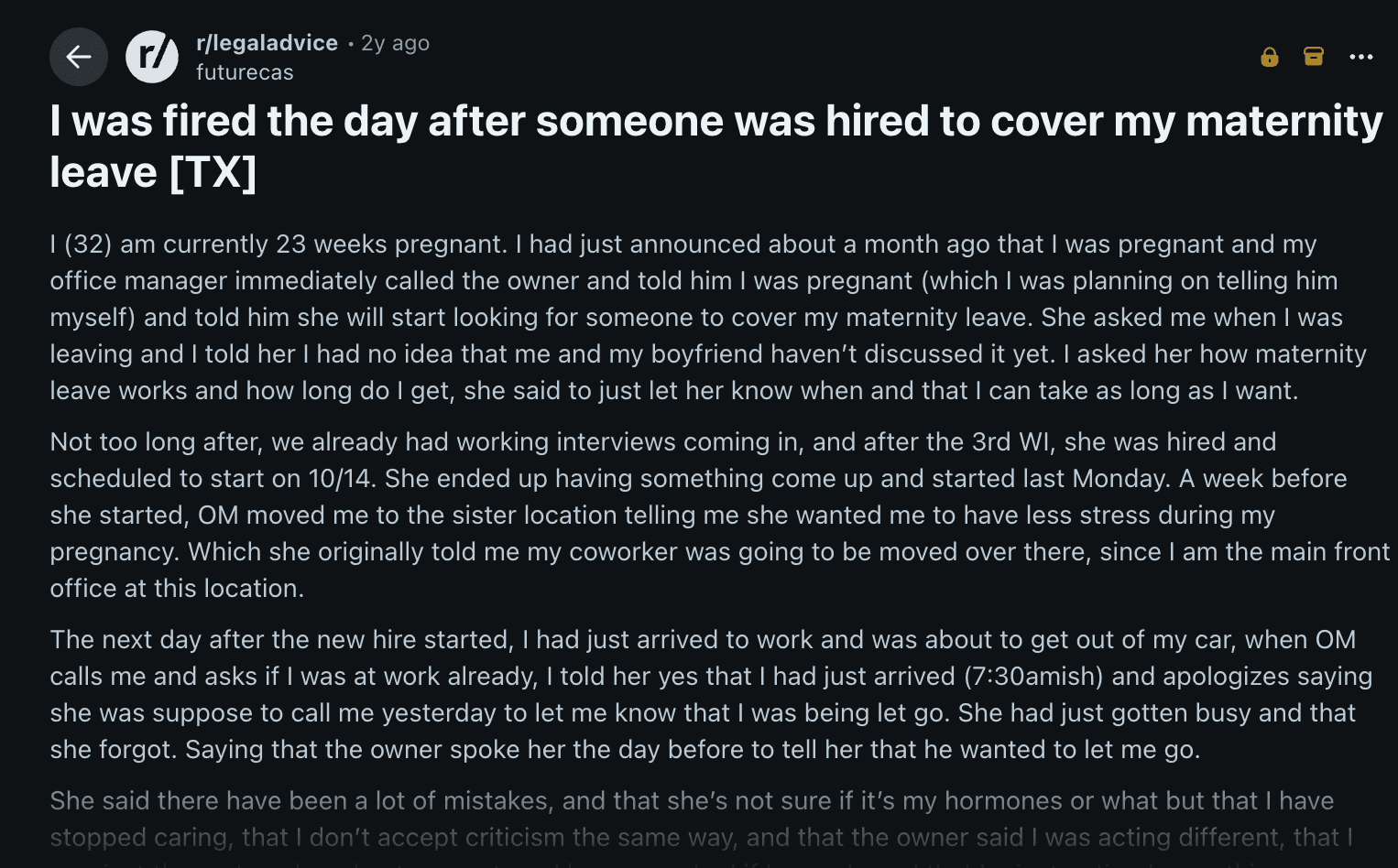
For employers, timing matters. If a termination follows a pregnancy announcement, the company needs clean, pre-existing documentation showing the decision was unrelated to pregnancy, leave, or accommodation.
"Can my employer end benefits while I'm on CFRA leave?"
A California AskHR thread discussed health benefits during CFRA leave after pregnancy-related leave.
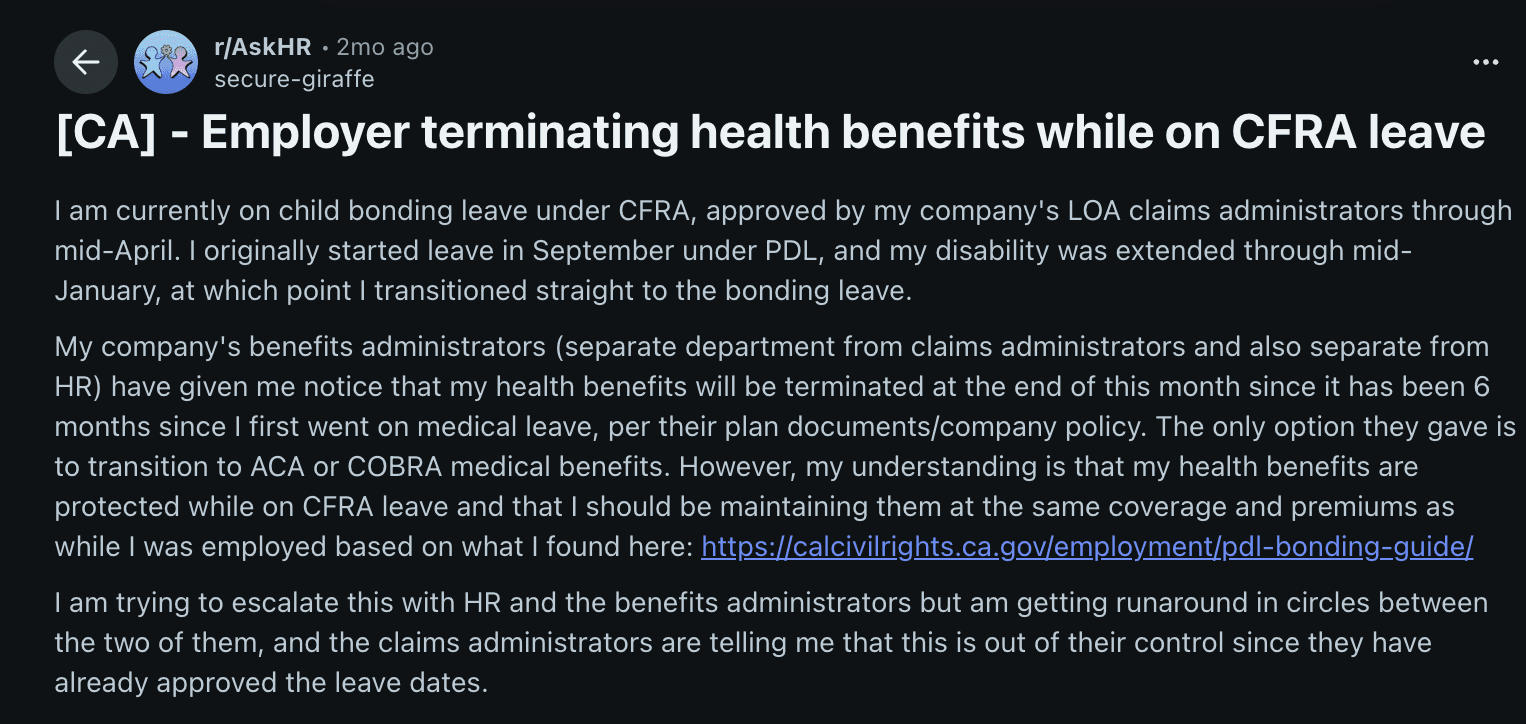
For employers, benefits administration needs to be handled carefully across PDL, FMLA, and CFRA. A benefits mistake can turn a leave issue into a separate compliance problem.
The employer takeaway: Employees are documenting pregnancy announcements, accommodation requests, leave approvals, benefit changes, performance reviews, and termination timing. If your records are incomplete, inconsistent, or created after the fact, the employee may control the timeline.
DefendMyBiz helps California employers manage pregnancy leave, accommodation, reinstatement, and retaliation risk before a routine HR decision becomes a lawsuit.
Conclusion
A pregnancy announcement starts a legally governed timeline with real deadlines, mandatory obligations, and serious exposure if mishandled. The employers who get sued are the ones who didn't understand that PDL and CFRA run consecutively, that reinstatement is mandatory without clean documentation to the contrary, or that accommodation obligations begin before leave ever starts.
If you're managing an active pregnancy leave situation or defending a claim that stems from one, get defense counsel involved before your next move.
Contact DefendMyBiz for a free 15-minute consultation → | (818) 418-6625
FAQs
Does PDL apply if the employee just started working for us?
Can we require the employee to start PDL before she's ready?
Do we have to pay the employee during PDL?
Can we hire a replacement while she's on leave?
What if the employee doesn't return after PDL ends but proceeds directly into CFRA bonding leave?
Disclaimer: The above content is for informational purposes only. This is not legal or tax advice. Laws, IRS guidance, and withholding requirements can change, and outcomes depend on specific facts. You are advised to contact a qualified attorney for any legal advice.


