You're Using Software to Screen Applicants. California's New AI Hiring Rules Could Make That a Discrimination Claim
FEHA / EEO Defense

You bought applicant tracking software. You turned on the resume-screening feature. You are getting ranked candidates delivered to your inbox before a human has read a single application.
What you may not know is that as of October 1, 2025, California law treats that software as your responsibility. As of June 22, 2026, a federal court confirmed that California's anti-discrimination law can reach the vendor who built it, the employer who used it, and every applicant rejected by the algorithm produced going back years.
AI hiring discrimination in California is not a theoretical future risk. It is active litigation, new regulation, and expanding employer liability happening right now. This guide explains exactly what changed, what the current lawsuits mean for your business, what California requires from you today, and the specific steps that separate a defensible hiring process from an expensive one.
Key Takeaways
California's FEHA regulations now govern employers' use of AI and automated decision systems in hiring, promotion, and other employment decisions.
Employers remain responsible for evaluating whether AI tools create discriminatory outcomes, even when using third-party vendors.
AI hiring systems should be documented, audited, and monitored for potential disparate impact.
Employers should retain ADS-related employment records for at least four years.
Vendor contracts, human review processes, and bias-testing documentation are becoming critical components of an AI hiring defense strategy.
What Changed on October 1, 2025
California's Civil Rights Council updated the Fair Employment and Housing Act regulations to explicitly cover automated decision systems (ADS), any tool that uses algorithms, machine learning, or AI to make or assist with employment decisions. Effective October 1, 2025, FEHA's anti-discrimination protections apply to every consequential hiring outcome produced by these tools.
Three things changed that matter most for California employers:
1.
Vendor tools are your liability.
Employers remain responsible for discriminatory outcomes even when the AI is built and administered by a third-party vendor. Vendors may be treated as agents under FEHA. You cannot point at the contract.
2.
Four-year data retention is mandatory.
All ADS data related to employment decisions, like scores, rankings, algorithmic outputs, not just final decisions, must be retained for a minimum of four years.
3.
Anti-bias testing and human oversight are required.
Employers must conduct periodic bias testing of their ADS tools and ensure meaningful human review is available when AI produces a consequential outcome.
If your business uses any of the following, these rules apply to you: AI-powered applicant tracking systems (Workday, Greenhouse, Lever), video interview scoring tools (HireVue), skills assessment platforms, AI resume screeners or ranking tools, or any software that produces scores or rankings used in hiring decisions.
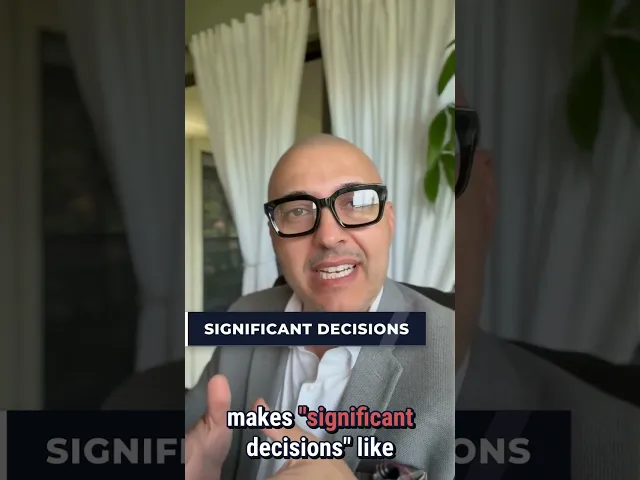
Watch: John Fagerholm on California's AI compliance requirements, bias audits, human review mandates, and what California employers need to do right now. California AI Compliance Update — DefendMyBiz YouTube
The Workday Ruling: What Happened and Why It Matters
The Mobley v. Workday case study is essential for every employer using AI hiring tools to understand right now.
Derek Mobley applied to over 100 jobs over seven years through companies using Workday's applicant tracking system. He was rejected within minutes each time. He sued Workday directly in 2023, alleging that Workday's AI screening tools discriminated based on age, race, and disability.
Here is the litigation timeline and where it stands today:
Date | Development |
|---|---|
May 2025 | Federal court grants preliminary certification as a nationwide age-discrimination collective action under the ADEA |
March 2026 | Court refuses to dismiss California state claims; amended complaint filed |
June 16, 2026 | Federal judge rules Workday can face state civil rights liability, including for non-California employers, because Workday is headquartered in California and its AI tools are designed and maintained there |
June 22, 2026 | Court refuses to dismiss FEHA claims. California's anti-discrimination law applies to Workday's conduct |
The practical implication for employers is that AI hiring records may become relevant evidence in future discrimination litigation. Employers should be prepared to explain how automated recommendations were generated, reviewed, and incorporated into final hiring decisions.
The Second Lawsuit Theory: Eightfold AI and the FCRA Problem
Workday is a discrimination case. The Eightfold AI class action filed in January 2026 is different and potentially more dangerous for employers who haven't considered it.
Plaintiffs allege that Eightfold AI scraped data on over one billion workers, scored job applicants on a zero-to-five scale, and delivered rankings to employer-clients all without the disclosures required by the Fair Credit Reporting Act.
If a court agrees that your AI hiring vendor's output is a consumer report, you, as the employer-user, face independent FCRA/ICRAA liability for failure to provide required disclosures on top of any FEHA discrimination exposure.
Legal Theory | Case | What It Attacks | Employer Exposure |
|---|---|---|---|
FEHA discrimination (ADS) | Mobley v. Workday | Discriminatory outcomes by protected class | Back pay, reinstatement, emotional distress, punitive damages |
FCRA/ICRAA consumer report | Kistler v. Eightfold AI | Failure to disclose AI-generated "consumer reports" | Statutory damages per applicant, ICRAA civil liability |
These two cases form a pincer. One attacks outcomes and the other attacks process. Both expose employers who use AI hiring tools without auditing what those tools are doing and without documenting how they are doing it.
Watch: John Fagerholm on AI entering the workplace: what it means for employers and the legal exposure that comes with it. Bots are Here, and They're Ready to Work — DefendMyBiz YouTube
The Biggest AI Hiring Defense Mistake: Treating the Vendor as the Decision Maker
Many employers assume AI compliance is the vendor's responsibility because the company did not build the algorithm. That assumption creates a documentation problem.
When a hiring decision is challenged, the employer still needs to show:
What tool was used
What role did the tool play
Whether humans reviewed the recommendation
Whether bias testing was performed
Whether the final decision involved independent judgment
The strongest defense is not proving that the AI tool is perfect. It is proving that the employer maintained a responsible, documented hiring process.
A Reddit Query: We Tested an AI Hiring Tool to Screen Candidates. What Should Employers Watch Before Using AI in Hiring?
A common employer question as AI hiring tools become more popular is whether applicant screening software can actually reduce the hiring workload without creating a risk of discrimination.
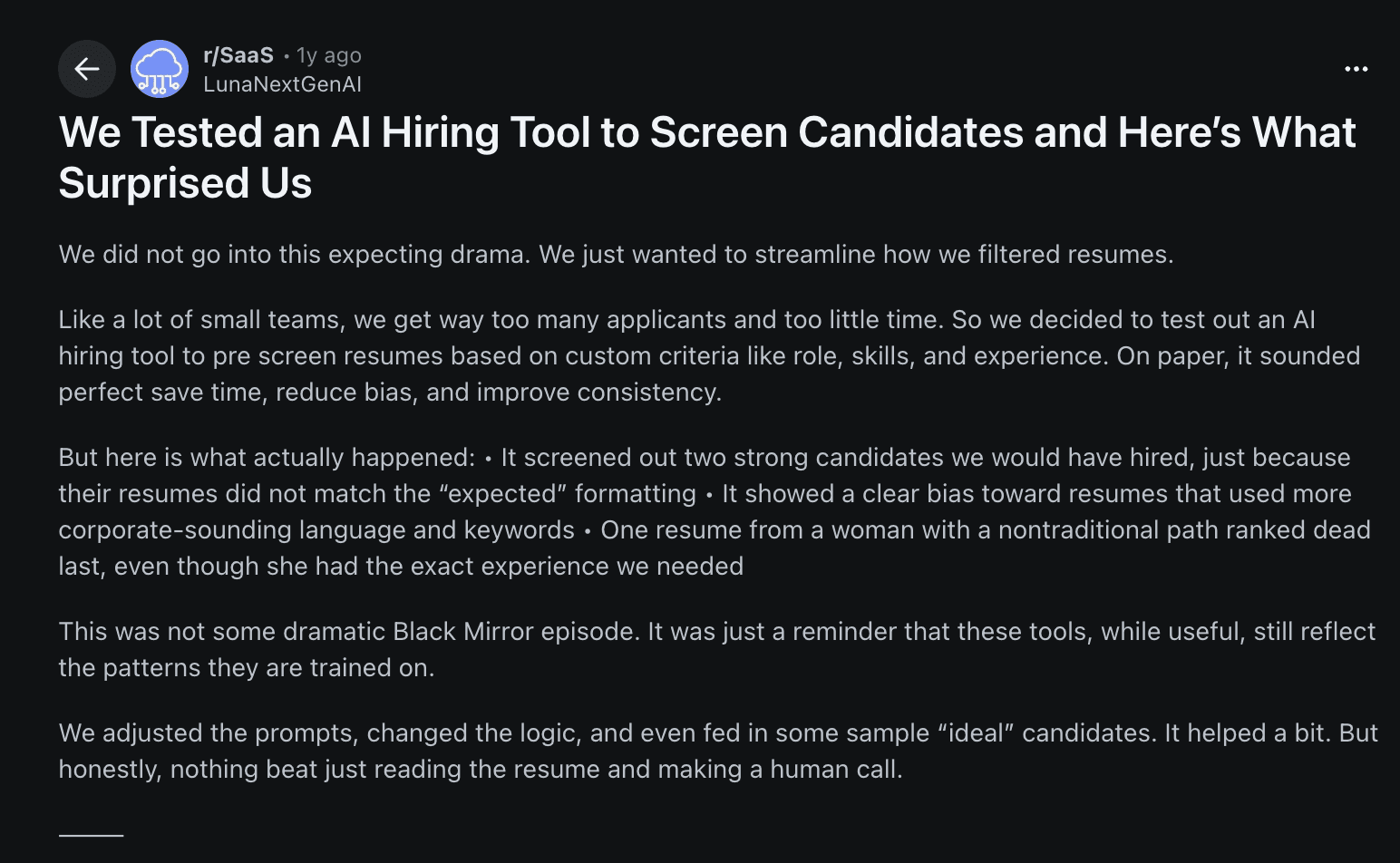
For California employers, the issue is whether they can defend their decision-making process when a candidate claims that the technology produced a discriminatory outcome.
Before relying on AI hiring software, employers should document:
What role the AI tool is being used for (screening, ranking, recommendations, assessments)
Whether a human reviewer evaluates AI-generated recommendations before making decisions
What criteria does the software use to rank or eliminate applicants
Whether the vendor provides bias testing or validation documentation
Whether rejected candidates are being filtered for job-related reasons rather than indirect factors
The biggest compliance risk is treating AI output as a final hiring decision..
For California employers, the safest approach is to use AI as a decision-support tool with documented human oversight, regular bias reviews, and a clear record showing that hiring decisions were based on legitimate job-related factors.
Building a defensible compliance process starts with documentation. DefendMyBiz's California Employment Law Compliance Guide provides a broader checklist for California employers managing hiring, wage, and workplace compliance risks.
What California Employers Must Do Right Now
Inventory your AI tools immediately. List every platform that touches hiring, promotion, or performance management. For each one: Does it produce a score, ranking, or recommendation? Is that output used in a consequential employment decision? If yes, FEHA's ADS obligations apply to that tool.
Request bias testing documentation from each vendor. Ask for anti-bias testing protocols, which protected characteristics are evaluated, testing frequency, and the most recent results. If the vendor cannot produce documentation, treat that as active exposure.
Review vendor contracts for three specific provisions:
Your right to audit the vendor's AI model for disparate impact
Liability and indemnification clauses covering discriminatory outputs
Data retention provisions covering the four-year California requirement
Build a four-year data retention policy for ADS outputs. This applies to AI-generated scores, rankings, and recommendations, not just final hire/no-hire decisions. If you cannot produce what your AI said about an applicant from 2022, you have a documentation gap that will matter in discovery.
Ensure meaningful human oversight. California regulations require that human review is available when AI produces a consequential outcome. "Meaningful" means a qualified person actually evaluates the AI's recommendation, not just rubber-stamps it. Document that review.
Audit for disparate impact. Run outcome analysis: are your AI tools producing statistically significant adverse impact against any protected class? This proactive analysis is your primary affirmative defense. Employers who conduct rigorous anti-bias testing and document it have significantly stronger litigation positions than those who do not.
AI hiring tools are becoming another layer of employment litigation risk in California, alongside wage claims, retaliation allegations, and classification disputes. To get an idea of California employment risk management, see California Employment Law Landscape 2026: Strategic Risk Management.
What Happens When a Claim Arrives
AI discrimination claims do not announce themselves clearly. They often arrive as an FEHA charge with the CRD, a civil complaint alleging disparate impact, or a subpoena as part of vendor litigation you did not initiate.
The employers who fare best in these situations have four things in place: a documented AI inventory, bias-testing records, vendor contracts with audit rights and indemnification, and a defensible paper trail of human oversight of AI-generated recommendations.
At DefendMyBiz, we represent California employers exclusively. Our employer defense attorneys understand both the FEHA ADS regulations and the emerging FCRA/ICRAA theories now active in California courts. We assess your actual exposure, evaluate your documentation, and build a defense tailored to your specific situation.
The DefendMyBiz FEHA/EEO defense team handles AI-related discrimination claims as part of a broader FEHA employer defense.
If you're already facing a claim related to AI hiring tools, contact DefendMyBiz for a free 15-minute consultation. If you'd like a legal review of your AI hiring practices before a claim arrives, book a 1-hour paid consultation.
FAQ
Does California's ADS regulation apply to my small business?
Can I rely on my vendor to handle compliance?
What is disparate impact, and how does it apply to AI hiring?
Does the FCRA apply to AI hiring tools?
How long do I need to keep AI hiring data in California?
Disclaimer: The above content is for informational purposes only. This is not legal or tax advice. Laws, IRS guidance, and withholding requirements can change, and outcomes depend on specific facts. You are advised to contact a qualified attorney for any legal advice.


