One Wage Statement Error Can Trigger a PAGA Claim Against Your Entire Workforce. Here's How to Stop It
PAGA Defense

Most California employers assume their payroll software is handling their pay stubs correctly. That assumption is one of the most expensive mistakes in employment defense.
Under Labor Code § 226, a single wage statement error, like one missing field, one wrong employer name, or one missing hourly rate, can expose you to a PAGA representative action covering every employee who received the same defective pay stub, for every pay period it ran.
The math compounds fast.
What's at Stake Before You Check Your Pay Stubs
§ 226(e) statutory damages: $50 for the initial pay period and $100 for each subsequent pay period, up to $4,000 per employee, plus costs and reasonable attorney's fees.
PAGA penalties on top: $100 per employee per pay period for initial violations, $200 for subsequent violations applied across your entire workforce within the one-year PAGA window.
"Knowing and intentional" is required for § 226 penalties. A good-faith compliance error can be a meaningful defense if you can document it
Under the 2024 PAGA reforms, wage statement violations are now curable, but you have a strict 33-day window after receiving a PAGA notice to act
Employers who took reasonable compliance steps before a PAGA notice may cap penalties at 15% of the amount sought.
The Nine Things Every California Pay Stub Must Show
Under Labor Code § 226(a), every wage statement issued in California must include all of the following accurately, every pay period:
Gross wages earned
Total hours worked for all non-exempt employees
Number of piece-rate units earned and applicable rate, if piece-rate applies
All deductions, itemized separately
Net wages earned
Inclusive pay period dates, both start and end
Employee's full name and last four digits of SSN or employee ID number
Employer's legal entity name and address, not only a trade name or DBA.
All applicable hourly rates in effect during the pay period, with corresponding hours worked at each rate
Additionally, employers must include the employee's available paid sick leave balance on every wage statement or in a separate document provided on the same date.
Watch: John breaks down exactly what Labor Code § 226 requires and what improper wage statements cost employers. Watch here →
If your workforce includes non-exempt employees with varying hourly rates, overtime, or double-time, item 9 is where most pay stubs break down. For how overtime miscalculations connect to wage statement exposure, see: Defending High-Stakes Unpaid Overtime Litigation in California.
The Most Common Wage Statement Errors Employers Miss
Error | Why It Happens | PAGA Risk |
|---|---|---|
DBA or trade name instead of legal entity name | Payroll setup uses the operating name | High, affects every employee every period |
Missing or wrong hourly rates | Multiple rates are not configured correctly | High, triggers § 226 and overtime regular rate issues |
Overtime hours are not shown separately | Payroll system lumps hours together | High, non-exempt employees specifically |
Sick leave balance is missing | Not all payroll systems auto-populate | Moderate, curable, but still a violation |
Incorrect pay period dates | System error or manual entry | Moderate, creates an inability to verify pay |
Missing piece-rate breakdown | Not configured for piece-rate workers | High, see § 226.2 requirements |
If your pay stubs show misclassification-related errors, for example, showing an employee as exempt when they're non-exempt, that cascades. See: Exempt vs. Non-Exempt California: Misclassification.
How a Single Error Becomes a Six-Figure PAGA Claim
Here's what the math looks like for a midsize employer:
Suppose there are 75 employees. One systematic error occurred: the employer name was incorrect on every pay stub (trade name instead of the legal entity name). This is running for 12 months (26 biweekly pay periods).
Here are the penalty calculations:
PAGA penalties at $100/employee/pay period: 75 × 26 × $100 = $195,000 in PAGA civil penalties alone
Employees receive 35% = $68,250. LWDA receives 65% = $126,750. Plus plaintiff attorney's fees.
Add the § 226 individual penalties ($50 first violation, $100 subsequent, capped at $4,000 per employee): 75 × $4,000 = $300,000 maximum additional exposure.
That's from one field on a pay stub, covering one year before litigation costs.
For the full PAGA defense framework, see: The California Employer's Complete Guide to PAGA Claims (2026).
What to Do If You've Already Found Errors
1) If no PAGA notice has been filed yet:
Correct the error immediately, issue corrected wage statements going back through the statute of limitations period (three years for § 226 records), and document every step: what the error was, how it occurred, when you discovered it, and what you changed.
2) If you've received a PAGA notice:
You have 33 calendar days from receipt of the notice to submit a cure proposal to the LWDA. Under the 2024 PAGA reforms, wage statement violations are expressly curable. To cure, you must provide a fully compliant wage statement for every defective pay period going back three years, make each aggrieved employee whole for any actual damages caused by the error, and pay any liquidated damages owed.
3) If you began taking reasonable compliance steps within 60 days of receiving the notice:
Penalties are capped at 30% of the amount sought, a significant reduction from full exposure. If you had documented compliance steps in place before the notice arrived, that cap drops to 15%.
Here's what not to do:
Do not retroactively alter records. Do not respond to the PAGA notice without counsel. Do not assume the cure window closes the matter. Cure reduces penalties but does not automatically end the action. Get defense counsel involved before the 33-day clock runs out.
For how PAGA exposure compounds across other wage and hour violations, see: PAGA Litigation 2026: Strategic Defense in the Post-Reform Era.
DefendMyBiz defends California employers against wage statements and PAGA claims. See: PAGA Defense and Wage & Hour Defense.
What Employers Are Asking Online
Across many Reddit forums, employers and payroll professionals regularly flag California wage statements as one of the easiest compliance issues to get wrong. The concern is not just whether employees were paid correctly. It is whether the pay stub displays the information correctly.
1) "We are expanding into California. What labor-law issues should HR prepare for?"
In a r/humanresources thread, an employer expanding into California asked what labor-law nuances they needed to prepare for. California-specific wage-and-hour compliance, including payroll and documentation risks, emerged as a major concern.
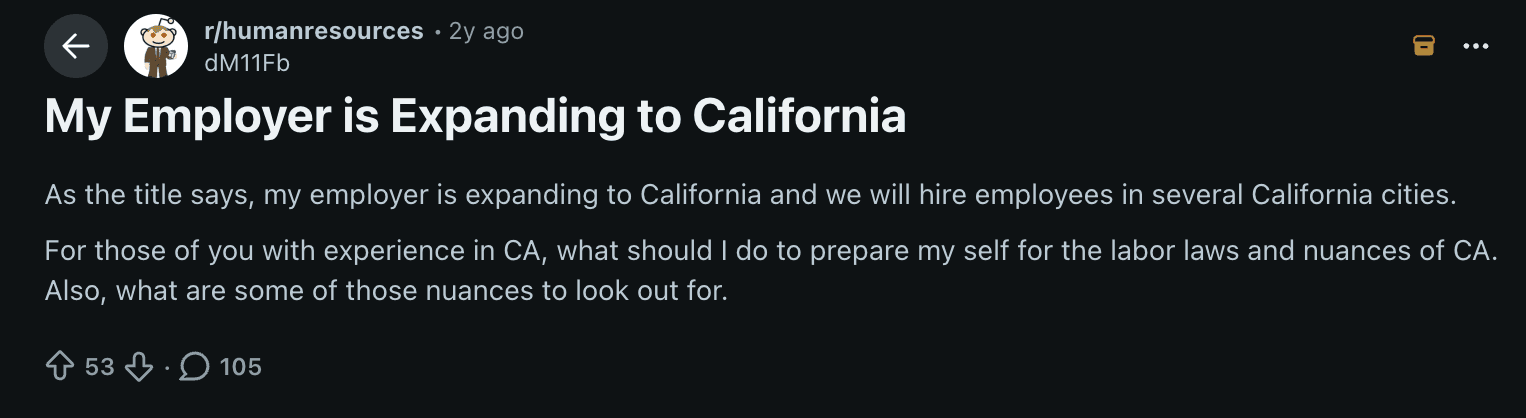
For employers, this is where prevention starts. Before hiring in California, HR and payroll need to audit pay stubs against § 226, confirm the legal entity name and address, configure sick leave balances, and verify all hourly rates and corresponding hours.
2) "How do we handle PTO and sick leave when California rules are involved?”
In another HR thread, an employer considering unlimited PTO asked how that policy should interact with California paid sick leave and leave administration.
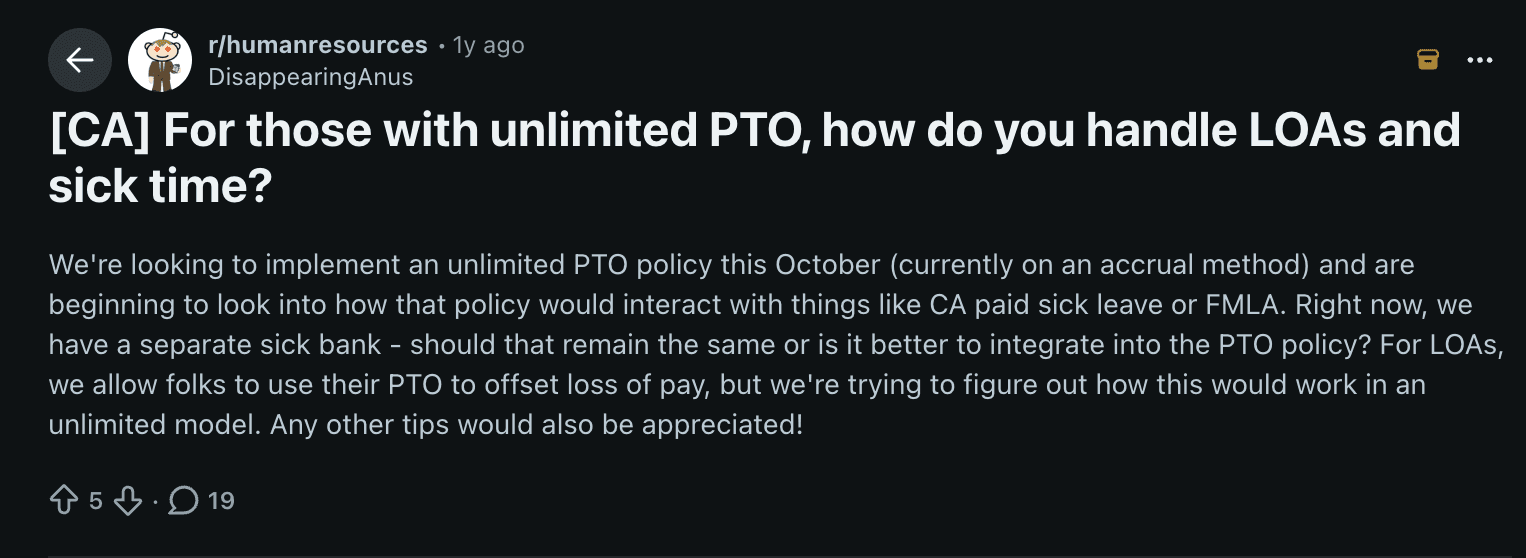
For employers, this is a payroll-design issue. If PTO, vacation, and sick leave are not separated and displayed properly, the wage statement may not give employees the information California law requires.
The employer takeaway: California wage statement claims often start with payroll setup decisions: the wrong employer name, missing sick leave balances, missing hourly-rate breakdowns, or pay codes that do not translate cleanly onto the stub.
DefendMyBiz helps California employers audit wage statements, correct payroll system defects, evaluate PAGA cure options, and defend wage-statement claims before a single pay stub issue becomes workforce-wide exposure.
Conclusion
A defective pay stub in California is a systemic PAGA exposure that multiplies with each employee and each pay period. Employers who reduce this risk are those that audit proactively, document their compliance processes, and act quickly when a notice arrives. The 33-day cure window exists, but only for employers who know how to use it before it closes.
If your pay stubs haven't been audited against § 226 requirements, do it now. If you have already received a PAGA notice alleging wage statement violations, get defense counsel involved today.
Contact DefendMyBiz for a free 15-minute consultation | (818) 418-6625
FAQs
Does my payroll software guarantee § 226 compliance?
What is the "knowing and intentional" standard under § 226?
Can I cure wage statement violations after receiving a PAGA notice?
How far back do wage statement records need to be kept?
What is the fastest way to reduce wage statement PAGA exposure?
Disclaimer: The above content is for informational purposes only. This is not legal or tax advice. Laws, IRS guidance, and withholding requirements can change, and outcomes depend on specific facts. You are advised to contact a qualified attorney for any legal advice.


