An Employee Is Claiming You Discriminated Against Them. Learn How to Defend That Decision
FEHA / EEO Defense

An employment discrimination claim in California starts a legally governed process with mandatory timelines, uncapped damages, and an enforcement framework that gives employees significant leverage.
The question is not whether the claim feels fair. The question is whether your decision was documented, defensible, and grounded in a legitimate business reason. Employers who defend these claims successfully aren't lucky. They're prepared.
What You're Actually Facing Under California Law
FEHA applies to employers with five or more employees, significantly broader than Title VII's 15-employee threshold.
California protects more categories than federal law, including gender identity, gender expression, sexual orientation, reproductive health decisions, and more.
FEHA imposes no cap on compensatory or punitive damages, unlike Title VII, which caps damages based on employer size
Employees have 3 years to file a FEHA complaint with the CRD, vs. 300 days under federal law
Retaliation is a separate claim. Adverse action after a protected complaint can create independent exposure if the employee can connect the action to the complaint.
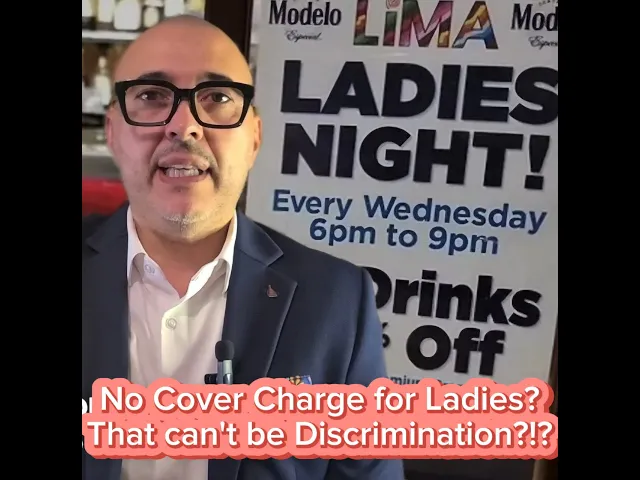
Watch: John explains how even seemingly minor gender-based business decisions can expose employers to discrimination in California and what employers need to understand about the reach of these laws. Watch here →
How the Legal Framework Works and Where Your Defense Lives
Most California discrimination cases are built on circumstantial evidence and analyzed under the McDonnell Douglas burden-shifting framework, adopted by California courts for FEHA claims.
Here's how it plays out:
Step 1 — Employee establishes a prima facie case
They show they are in a protected class, were qualified, suffered an adverse employment action, and that the circumstances suggest a discriminatory motive. This bar is intentionally low.
Step 2 — Burden shifts to you
You must articulate a legitimate, nondiscriminatory reason for the adverse action, like performance, misconduct, business necessity, or restructuring. The reason must be specific and supportable. Vague justifications ("not a good fit," "attitude issues") invite pretext arguments.
Step 3 — The employee must show a pretext
The employee then has to show that the stated reason is a pretext for discrimination. This is where the defense is won or lost and where your documentation either protects you or exposes you.
Here's a critical takeaway for employers:
Under FEHA, a plaintiff doesn't need direct evidence of bias. Circumstantial evidence, such as timing, the comparative treatment of similar employees, manager comments, and deviations from standard procedure, can all support the inference. Your documented legitimate reason is the core of your defense. Without it, pretext arguments are easy to make.
For how FEHA discrimination claims intersect with wrongful termination exposure, see: Wrongful Termination Defense in California: What Employers Need to Know.
What Makes a Legitimate Business Reason Defensible
Not all stated reasons hold up under scrutiny:
Defense Position | Holds Up When | Falls Apart When |
|---|---|---|
Performance-based termination | PIPs, reviews, and warnings predate the complaint | The first negative review appears after the protected activity |
Restructuring/elimination | Documented org changes affect multiple employees | The same work continues under a different title |
Misconduct | Policy violation was documented at the time | Discipline was applied inconsistently |
Business necessity | Operational need was documented before the adverse action | The decision rationale was created after the claim |
Qualifications-based decision | Objective criteria were applied consistently | The selection criteria shifted between candidates |
The pretext trap: California courts allow plaintiffs to prove pretext through comparative evidence of employees outside the protected class who engaged in similar conduct and were treated differently. Documented consistency in how you apply standards across all employees is your protection.
The timing problem: Adverse actions taken close in time to a protected event create a strong inference of discriminatory motive. If the decision was already in motion before the protected event occurred, you need documentation that predates it.
If you're also managing a misclassification or exempt status issue alongside a discrimination claim, see: Exempt vs. Non-Exempt Employees in California: Misclassification.
The CRD Process: What Happens After a Complaint Is Filed
Before an employee can sue under FEHA, they must first file a complaint with the California Civil Rights Department (CRD). This is both a procedural requirement and a defense opportunity.
The process:
Employee files a complaint with CRD within 3 years of the discriminatory act
CRD notifies you and typically requests a position statement, i.e., your written response to the allegations
CRD investigates, mediates, or issues a Right to Sue notice allowing the employee to proceed to civil court
Civil litigation follows if not resolved at the CRD level
Your position statement is critical. It is your first opportunity to put your legitimate business reason on the record, with documentation. A weak, vague, or inconsistent position statement becomes plaintiff's exhibit A at trial. Your position statement and the supporting record must be aligned and specific from day one.
Watch: John breaks down the 2024 California Supreme Court ruling that a single racial slur from a coworker can trigger employer liability for hostile work environment. What it means for your response to employee complaints. Watch here.

For the full FEHA defense picture: FEHA/EEO Defense.
Where Employers Lose Discrimination Cases Specifically
Inconsistent application of policies. If your handbook says X but managers did Y for most employees, the deviation for this employee is evidence. Consistency is your defense.
Manager comments that become evidence. Offhand comments about an employee's age, religion, pregnancy, or disability, even ones intended as jokes, become direct evidence of discriminatory motive.
Failing to follow your own procedures. If your progressive discipline policy requires a written warning before termination and you skipped it for this employee, that procedural deviation is pretextual evidence.
Retroactive justification. Documentation created or retrieved after a complaint is filed that wasn't communicated to the employee before the adverse action looks exactly like what it is. Contemporary documentation, created at the time of the performance issue or decision, is the only kind that holds up.
Hybrid and non-FEHA claims are often added alongside discrimination claims. To understand how hostile work environment claims develop in parallel with discrimination claims, read: Hostile Work Environment Claims: Defeating Subjective Standards.
What Employees Are Saying Online
On Reddit's r/humanresources and r/managers, HR professionals and managers regularly ask what to do when performance issues, terminations, and employee complaints begin to look like discrimination or retaliation claims. These discussions show where employer-side defenses are usually won or lost.
1) "Can we terminate without a formal PIP?"
In one r/humanresources thread, an HR professional described a manager who wanted to terminate an employee but had very little documentation in the review record. The discussion centered on whether the company had enough evidence to support the decision.
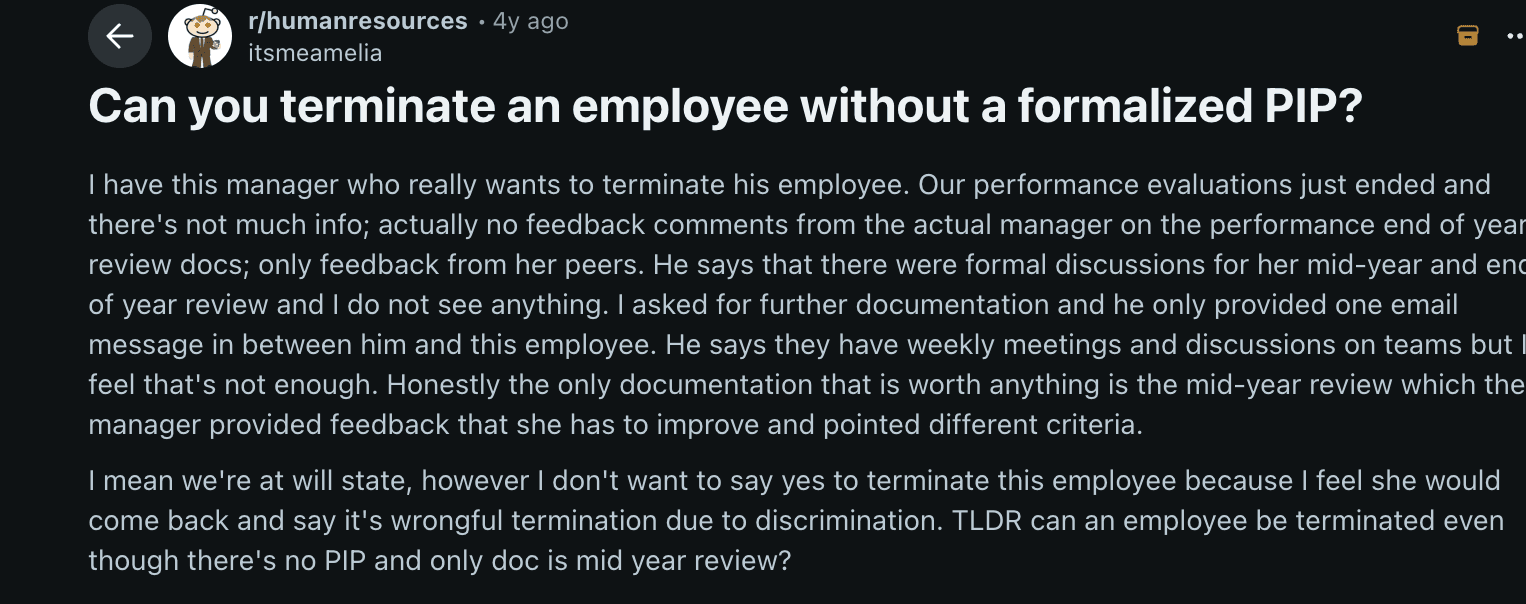
For employers, this is the core discrimination-defense issue. A termination may be legitimate, but if the performance record is thin, inconsistent, or created after the complaint, the employee has room to argue that it is a pretext.
2) "What if an underperforming employee files a harassment or discrimination claim after a PIP?”
A r/managers thread discussed underperforming employees making HR complaints after corrective action began. The comments focused heavily on documentation, HR involvement, and staying consistent.
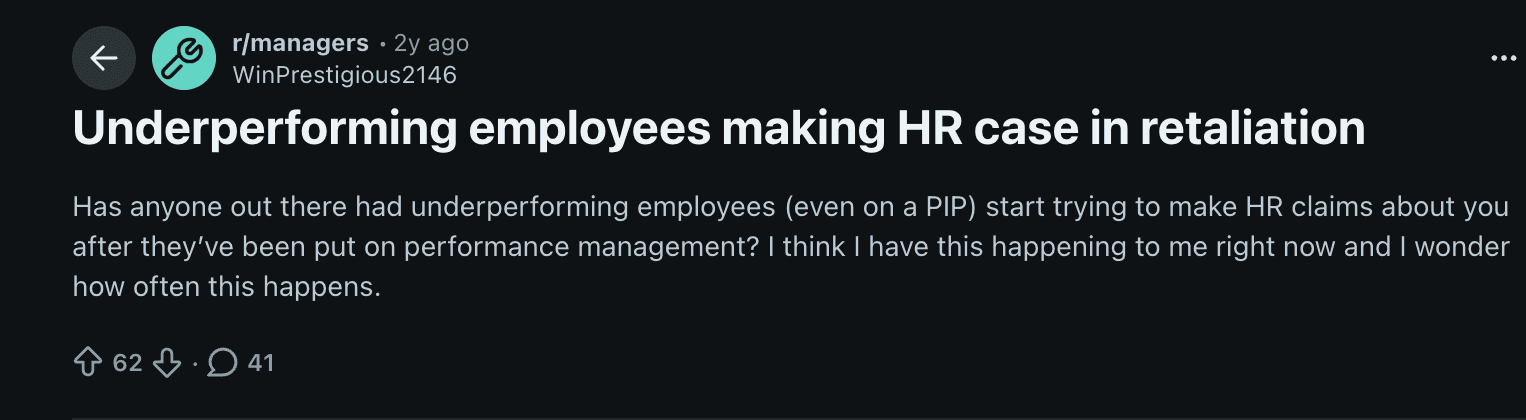
For employers, timing is the danger point. If the discipline started before the complaint, preserve that record. If it started after the complaint, expect the employee to argue retaliation or that it was a pretext.
The employer takeaway: Discrimination claims are rarely defended by general statements such as "it was a business decision." They are defended with dated performance records, consistent policy enforcement, clean comparator evidence, and a CRD/EEOC response that matches the documentation.
DefendMyBiz helps California employers build and defend legitimate business reasons before a personnel decision becomes a FEHA discrimination, retaliation, or wrongful termination claim.
Conclusion
A FEHA discrimination claim centers on one question: was your decision documented, consistently applied, and grounded in a legitimate business reason that predates the complaint?
The employers who successfully defend these claims aren't those who made better decisions. They documented them at the time, applied standards consistently, and responded to the CRD process with a specific, evidence-based position from day one.
If you've received a FEHA complaint or EEOC charge, get defense counsel involved before you respond. The position you establish in the first 30 days shapes the entire case.
Contact DefendMyBiz for a free 15-minute consultation | (818) 418-6625
FAQs
Does an employee have to prove intent to discriminate under FEHA?
What is the difference between FEHA and Title VII for California employers?
What makes a "legitimate nondiscriminatory reason" defensible under FEHA?
Can an employer be liable for a coworker's discriminatory conduct?
What protected categories does FEHA cover that federal law does not?
Disclaimer: The above content is for informational purposes only. This is not legal or tax advice. Laws, IRS guidance, and withholding requirements can change, and outcomes depend on specific facts. You are advised to contact a qualified attorney for any legal advice.


