Your Arbitration Agreement May Not Stop a PAGA Claim. Here's What California Courts Are Enforcing
PAGA Defense

You have an arbitration agreement. Your employee signed it, and you may assume that means a PAGA claim stays out of court. That assumption is only partly right.
Since 2022, the U.S. Supreme Court, the California Supreme Court, the Ninth Circuit, and multiple California Courts of Appeal have reshaped what arbitration agreements do and do not protect against. If your agreement hasn't been reviewed since then, it almost certainly doesn't reflect current law.
What You Think Your Arbitration Agreement Does vs. What It Actually Does
A properly drafted agreement can compel an employee's individual PAGA claim to arbitration, the portion covering violations they personally suffered
It cannot waive the representative PAGA claim, the portion seeking penalties on behalf of all other aggrieved employees
That representative claim stays in court, and the employee retains standing to pursue it.
"Headless PAGA" is now a live threat: employees are dropping individual claims entirely to avoid arbitration and pursuing representative claims straight to court.
Under the EFAA (2022), sexual harassment and assault claims cannot be compelled to arbitration, and the entire case is exempt if it includes a harassment claim, including unrelated wage claims
Boilerplate agreements are increasingly vulnerable, especially if they lack mutuality, include unfair cost terms, or fail to address current California arbitration and PAGA law.
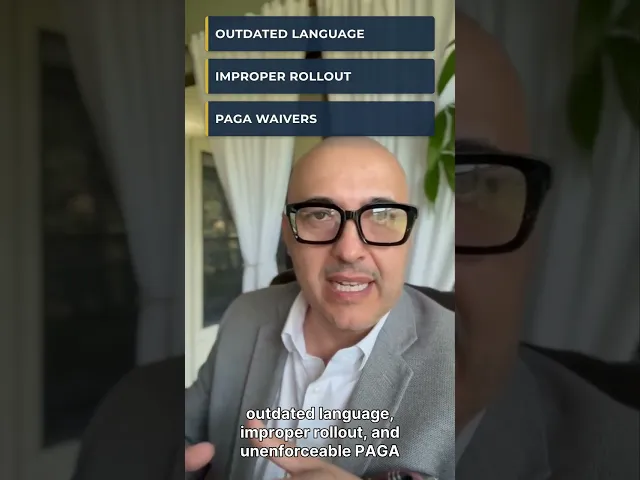
Watch: John explains how arbitration agreements are being challenged in California courts right now and what employers need to know. Watch here →
The Case Law That Changed Everything
Case | Date | What It Means for You |
|---|---|---|
June 2022 | FAA requires arbitration of individual PAGA claims; representative claims may survive | |
July 2023 | Employee compelled to individual arbitration retains standing to pursue representative PAGA in court | |
Feb. 2024 | Federal courts in California must follow Adolph | |
Dec. 2024 | "Headless PAGA" not permitted; every PAGA action must include an individual claim | |
July 2025 | "Headless PAGA" IS permitted; a direct appellate split created | |
Feb. 2025 | EFAA voids arbitration for the entire case when a harassment claim is included | |
Aug. 2025 | Missing arbitration fee deadline = forfeit right to arbitrate; FAA doesn't save you | |
April 2025 | California Supreme Court will resolve the headless PAGA split; decision expected in 2026 |
The bottom line: Your arbitration agreement sends the individual PAGA claim to arbitration. The representative PAGA claim covering your entire aggrieved workforce survives and proceeds in court. That's where the real exposure lives.
For the full PAGA defense framework, see: PAGA Litigation 2026: Strategic Defense in the Post-Reform Era.
The "Headless PAGA" Problem: What It Means Right Now
After Adolph, plaintiff attorneys developed a strategy: drop the individual PAGA claim before arbitration can be compelled, then pursue the representative claim straight to court, bypassing the arbitration agreement entirely.
California's Courts of Appeal are currently split on whether this works. Two districts say no (Leeper, Williams v. Alacrity, 2025). Two districts say yes (Rodriguez v. Packers Sanitation, 2025; CRST Expedited, 2025).
The California Supreme Court accepted review of Leeper in April 2025, unprompted by either party. A definitive ruling is expected in 2026. Until then, the viability of a headless PAGA theory depends on the pleading, forum, and controlling appellate authority.
Practical implication: You cannot assume your agreement eliminates PAGA representative exposure regardless of how it's pled. Even where headless PAGA is rejected, the representative claim survives individual arbitration under Adolph. The agreement limits the forum; it doesn't eliminate the claim.
For how PAGA standing can be challenged once a claim is filed, read PAGA Standing Challenges: How Employers Can Attack Who Filed and Why.
Two Additional Traps Employers Are Missing
1) The EFAA expansion
The Ending Forced Arbitration of Sexual Assault and Sexual Harassment Act (2022) prevents compelling arbitration of sexual harassment and assault claims. Most employers know this.
What they don't know: in Casey v. Superior Court, the court held that when a case includes a harassment claim, the entire case is exempt from arbitration, including any unrelated wage-and-hour claims. A choice-of-law provision attempting to route around the EFAA was rejected. Mixed-claim cases, such as harassment plus overtime or harassment plus PAGA, may not be arbitrable at all.
2) The arbitration fee deadline
Under California Code of Civil Procedure § 1281.98, employers must pay arbitration fees by their due date. In Hohenshelt v. Superior Court, the California Supreme Court confirmed that this fee deadline statute survives FAA preemption. This means if you miss the payment, you forfeit the right to arbitrate entirely. The case then proceeds in court. A late payment of the arbitration fee can put the arbitration forum at risk.
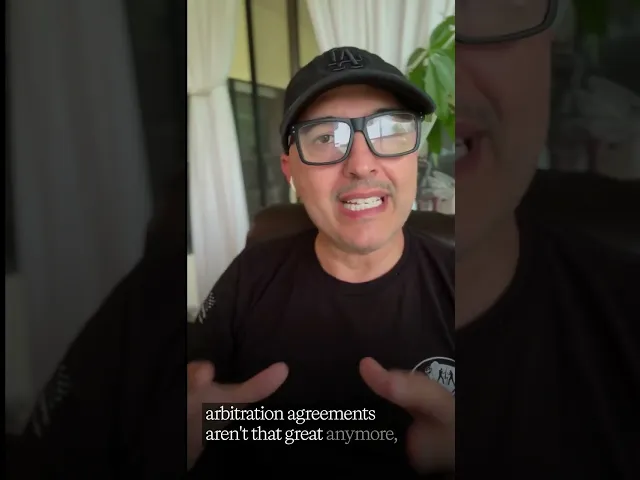
Watch: John answers the question employers are actually asking: Are arbitration agreements still worth it in California? Watch here →
What a Defensible California Arbitration Agreement Requires Right Now
Arbitration agreements still provide meaningful employer protection, but only if drafted for California's current legal environment:
Mutual obligation. Both parties must be bound to arbitrate. An agreement that requires employees to arbitrate but reserves the employer's right to sue in court for certain claims is unconscionable.
Class action waiver, properly structured. Epic Systems Corp. v. Lewis upheld class action waivers. Include one but separate from any PAGA language, which cannot waive representative standing post-Adolph.
Fair cost terms. Agreements that require employees to pay arbitration fees they cannot reasonably afford are void. California courts scrutinize cost allocation heavily.
Severability clause. One bad provision can take down the entire agreement without severability language.
Current drafting. Agreements drafted before 2022 don't address the EFAA. Before 2023, they didn't address the post-Adolph PAGA landscape. Before August 2025, they may not reflect the fee-deadline forfeiture rule under Hohenshelt. If your agreement hasn't been reviewed since Adolph, it needs to be reviewed now.
For how wage and hour claims compound alongside arbitration disputes: California Employer FAQ: The 10 Most Common Wage & Hour Questions Answered.
For defense services: PAGA Defense → | Wage & Hour Defense →
What Employers Are Asking Online and What It Signals
Across Reddit's r/humanresources and employer-focused business threads, HR professionals and business owners are asking whether arbitration agreements are still worth using, where they belong, and what happens when they are drafted or handled incorrectly. Those are the same questions California employers need to answer after Adolph, the EFAA, and Hohenshelt.
1) "Should we include arbitration clauses in offer letters?”
In one r/humanresources thread, an HR professional asked whether arbitration clauses should be included in U.S. offer letters and whether they make employment disputes more complicated instead of easier.

For employers, this is the drafting problem. Arbitration language should not be casually dropped into an offer letter without current legal review. California agreements need to address mutuality, class waivers, PAGA limits, EFAA carveouts, and fee-payment administration.
2) "Can we use a template or an AI-generated arbitration agreement?”
In a r/humanresources thread about handbook templates versus legal review, HR users warned that arbitration agreements are contracts that need professional drafting, especially in employee-friendly states such as California.
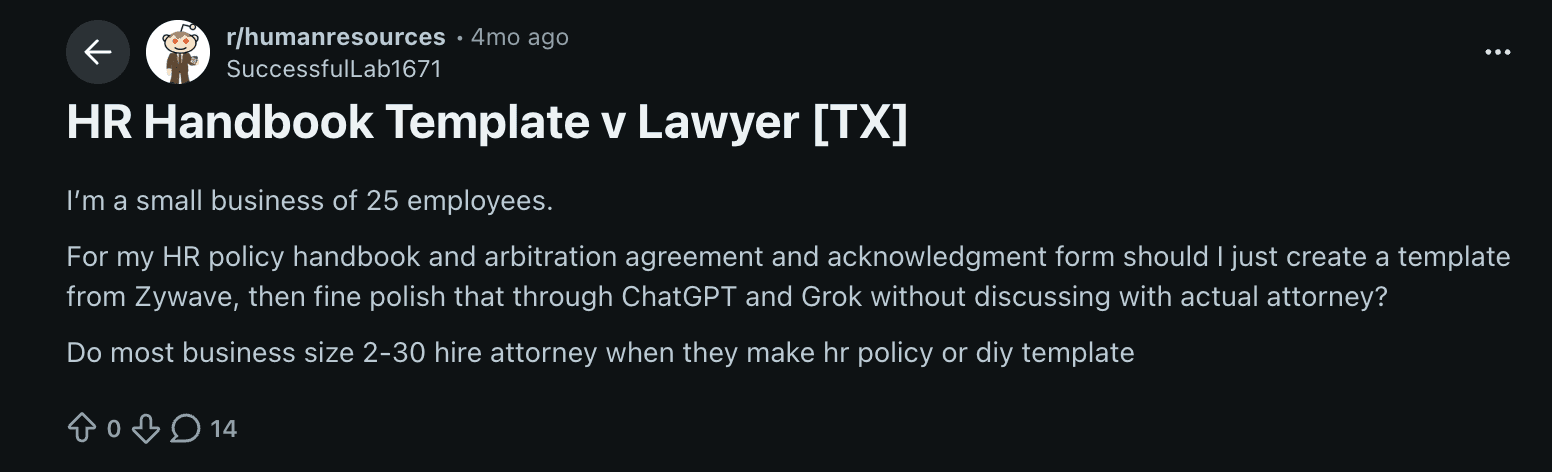
For employers, this is the enforceability problem. A generic arbitration template may fail when it is needed most, especially if it does not reflect post-2022 PAGA law, EFAA limits, or California unconscionability standards.
The employer takeaway: Arbitration agreements are still useful, but they are no longer "set it and forget it" documents. California employers need current drafting, clear PAGA carveouts, EFAA language, enforceable cost terms, severability, and a system for paying arbitration fees on time.
DefendMyBiz helps California employers review arbitration agreements, update PAGA and EFAA language, defend motions to compel arbitration, and avoid procedural mistakes that move the case back into court.
Conclusion
An arbitration agreement in California is still worth having, but only if it reflects what courts are actually enforcing today. Adolph changed the PAGA landscape. The EFAA and Casey expanded harassment exemptions beyond what most employers expect. Hohenshelt added a new forfeit trap. And headless PAGA remains unresolved pending the California Supreme Court.
An agreement drafted before 2022 almost certainly doesn't address any of this. If yours hasn't been reviewed, that review is overdue.
Contact DefendMyBiz for a free 15-minute consultation → | (818) 418-6625
FAQs
What is an arbitration agreement, and does it stop all employment claims in California?
Can a California employer use an arbitration agreement to stop a PAGA representative action?
What is "headless PAGA" and why does it matter for employers?
What happens if we miss an arbitration fee payment deadline?
Are arbitration agreements still worth having in California?
Disclaimer: The above content is for informational purposes only. This is not legal or tax advice. Laws, IRS guidance, and withholding requirements can change, and outcomes depend on specific facts. You are advised to contact a qualified attorney for any legal advice.