Algorithmic Performance Monitoring: When Productivity Software Becomes a Disability Claim
FEHA / EEO Defense
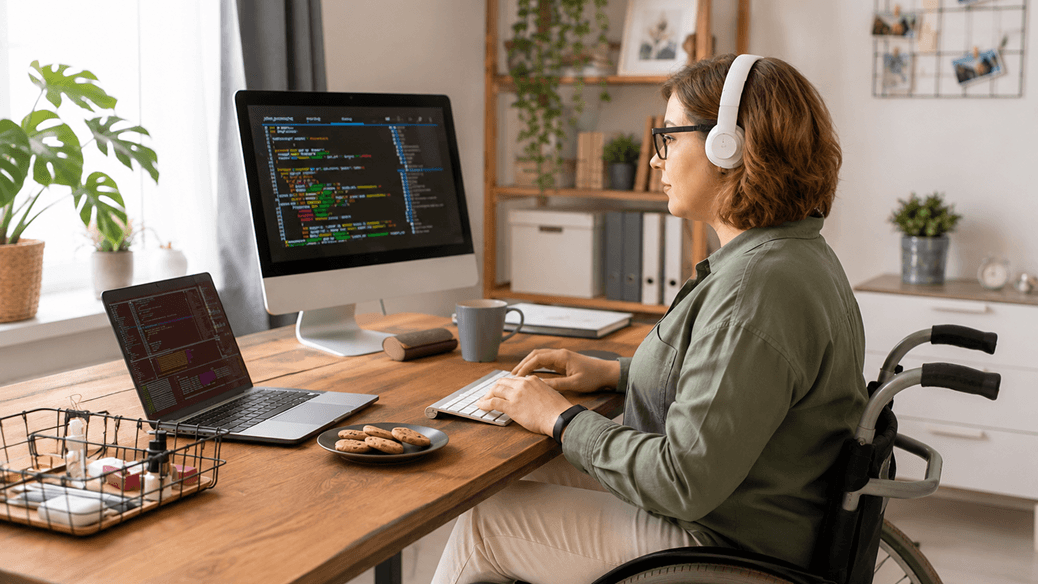
The productivity software you use to track attendance, output, and idle time wasn't designed to account for an employee taking more frequent breaks because of a documented medical condition. That gap between what the algorithm measures and what the law requires you to accommodate is where algorithmic performance-monitoring disability claims originate.
Employers can be held responsible when their use of algorithmic performance-monitoring tools results in unlawful disability discrimination or interferes with reasonable accommodation obligations. Using a third-party vendor does not, by itself, eliminate the employer's legal responsibilities.
Here's exactly where that risk lives and what changes your legal exposure.
Key Takeaways
The EEOC has warned that employers' use of software, algorithms, and AI can violate the ADA when those tools disadvantage workers with disabilities or fail to account for reasonable accommodations.
FEHA's disability definition is broader than the ADA's, requiring only that a condition "limit" a major life activity rather than "substantially limit" one.
Common failure patterns include break-frequency flags, assistive technology logged as inactivity, and modified schedules read as attendance problems, all of which are forms of unintentional proxy discrimination.
A documented human-review gate before any adverse action is the single highest-value compliance control available.
Monitoring tools with AI-driven scoring may also trigger California's separate FEHA Automated-Decision System regulations, layering a second compliance framework on top of the ADA/FEHA disability analysis.
Why "the Software Did It" Isn't a Defense
Algorithmic performance monitoring encompasses any automated system that collects, scores, or flags employee data such as keystrokes, idle time, login patterns, task completion rates, and break frequency.
The EEOC's 2022 technical assistance document, The Americans with Disabilities Act and the Use of Software, Algorithms, and Artificial Intelligence to Assess Job Applicants and Employees, is explicit: employers remain responsible for discriminatory outcomes generated by algorithmic tools, including ones built and operated by a third-party vendor. The absence of a human decision-maker in the moment isn't a defense.
California's FEHA raises the stakes further. Unlike the ADA, which requires a disability to "substantially limit" a major life activity, FEHA only requires that it "limit" one. This lower bar puts more employees and conditions in the protected category than federal law alone would cover.
How a Neutral System Produces a Discriminatory Outcome
None of these require intentional bias. They happen because the system was never configured with accommodation needs in mind:
Break frequency flagged as underperformance.
Employees managing chronic conditions often need more frequent breaks. A system that treats break frequency as a productivity problem can create exposure if the employer knows that additional breaks are part of a reasonable accommodation yet treats them as evidence of poor performance.
Medication cycles read as inconsistency.
Episodic conditions create variable output patterns that automated scoring treats as performance failures rather than a known, documented pattern.
Assistive technology logged as inactivity.
Screen readers and alternative input devices can be registered as idle time by monitoring software that wasn't designed to recognize them.
Modified schedules flagged as attendance problems.
A schedule adjustment granted as an accommodation can trigger an attendance alert in a system not configured to reflect it.
If a revoked offer or an adverse employment decision has ever hinged on an automated system's output in your business, it's worth knowing how closely regulators scrutinize that exact fact pattern. Our breakdown of a $93K settlement arising from a hiring decision that skipped a required individualized review addresses a different statute.
But the underlying lesson is the same one that applies here: an automated or procedural shortcut in an employment decision, without documented human judgment, is exactly what regulators and plaintiffs' attorneys target first.
What This Actually Looks Like as a Legal Claim
This connects directly to an obligation most employers already know about but rarely apply to their monitoring software specifically: the interactive process.
California requires a timely, good-faith interactive process once an employer becomes aware of a possible need for accommodation. When performance monitoring is part of the employee's work environment, a defensible process should also examine whether the monitoring system measures the employee against standards that do not account for the approved accommodation.
Getting the specific documentation right is also the kind of gap our FEHA / EEO Defense team reviews before it becomes a filed claim. The same interactive-process standard that governs a standard accommodation request applies here, with a monitoring system in the middle.
Three Different Ways a Monitoring System Can Create Disability Risk
1. Failure to accommodate
The employer knows an employee needs an accommodation but continues applying a monitoring standard that doesn't account for it.
2. Disparate treatment
The employer knowingly treats an employee differently because of the employee's disability or the employee's need for an accommodation.
3. Disparate impact / screening out
A neutral selection criterion or automated system disproportionately screens out individuals with disabilities and cannot satisfy the applicable legal defense.
California's final ADS regulations specifically address qualification standards, tests, and other selection criteria that screen out or tend to screen out applicants or employees with disabilities.
Auditing Your Current System
Before a claim surfaces, these questions tell you where the actual risk sits:
Does the monitoring software allow per-employee threshold adjustments for employees with active accommodations?
Have you confirmed in writing with your vendor that accommodation-specific settings exist and are actually supported, not just theoretically possible?
Does any automated alert trigger discipline before a trained human reviews the flagged data in context? If so, that's the single highest-risk gap in the system.
Have you requested the vendor's own disparate impact testing on the tool, specifically covering workers with disabilities?
Do your managers know what a flagged metric means for an employee on an active accommodation plan, or do they treat every flag the same regardless of context?
Does the system allow HR to document an accommodation-related exception without exposing unnecessary medical information to managers?
Can the employer distinguish an approved accommodation from an ordinary attendance or productivity event when reviewing an automated flag?
That last question matters more than most employers assume. If your managers haven't been specifically trained on how monitoring flags interact with an active accommodation, that gap is exactly what a plaintiff's attorney looks for first.
Employer/manager perspective: "How do we actually monitor productivity?"
In r/askmanagers, a manager described leadership considering productivity-tracking software to improve visibility into remote-work performance, accountability, and billable hours.

The discussion specifically raises the problem of tools that measure activity rather than actual work product. It's a weakness that becomes more serious when an employee has a disability or an accommodation that affects how they work.
A separate discussion in r/cscareerquestions describes an employer using software that tracked typing, mouse clicks, application switching, and generated a "productivity score" that managers planned to review with employees.

The recurring employer-side question is not simply "Should we monitor productivity?" It is "What does the metric actually measure, and what happens when the metric conflicts with the way an employee is legitimately permitted to work?"
That is the point at which a productivity tool can move from an operational system into an employment-law issue.
Building a Human-Review Process Before an Automated Flag Becomes Discipline
1.
Map every automated decision point:
every place the system generates a score, alert, or flag that could plausibly influence a review, a warning, or a termination.
2.
Require human review before taking any adverse action.
No automated flag should trigger disciplinary action without a trained HR professional first reviewing the underlying data in context.
3.
Document each review in writing:
who reviewed it, what contextual factors were considered, and how the decision was reached. An undocumented review carries almost no weight later.
4.
Request and keep the vendor's bias documentation.
Ask specifically whether the system has been tested for disparate impact on workers with disabilities, not general fairness testing.
5.
Run periodic comparison checks:
how often does the system flag employees with documented accommodations relative to the broader workforce? A consistent gap is exactly the kind of pattern a disparate impact claim is built on.
6.
Update training whenever the system changes.
A new software version or configuration change can quietly reintroduce a risk your prior training addressed.
If your monitoring tool incorporates AI or machine learning components, it may also fall under FEHA's Automated-Decision System regulations, which took effect on October 1, 2025, and impose their own recordkeeping and vendor liability requirements.
Our guide on California's AI hiring regulations and vendor liability covers that overlapping framework, since a performance monitoring tool with AI-driven scoring can trigger both sets of obligations at once.
What to Ask Before You Buy or Renew a Monitoring Tool
Question to Ask the Vendor | Why It Matters |
|---|---|
Can accommodations be configured at the individual employee level? | Determines whether adjustments are even technically possible |
Has this system been tested for disparate impact on workers with disabilities specifically? | General fairness testing doesn't answer this question |
What happens when an accommodation conflicts with a standard metric threshold? | Reveals whether the system defaults to flagging the accommodation itself |
Does the system distinguish assistive technology use from inactivity? | A common, unintentional source of false flags |
A vendor that can't answer these clearly is itself a compliance risk you're inheriting, not just a software choice.
Conclusion
Under the ADA and California's broader FEHA disability standard, employers remain fully liable for discriminatory outcomes resulting from algorithmic performance-monitoring software, including third-party tools. This is regardless of intent, because the absence of a human decision-maker in the moment is not a legal defense.
The risk concentrates in specific, predictable patterns: break-frequency flags, assistive technology misread as inactivity, and modified schedules registering as attendance problems, all of which can constitute proxy discrimination without any human ever intending to discriminate.
If your business uses performance monitoring software and hasn't reviewed it against these standards, DefendMyBiz offers a paid 1-hour consultation. Book a call with our employer defense team today.
Frequently Asked Questions
Can I be held liable if my monitoring software, not a human, made the decision?
What does "disparate impact" mean for algorithmic performance monitoring?
Does the ADA require modifying a monitoring system as part of an accommodation?
What should I do if I receive a discrimination charge tied to my monitoring system?
Are employers required to train managers on disability accommodations within monitoring systems?
Can an employer use productivity-monitoring software on an employee with a disability?
Disclaimer: The above content is for informational purposes only. This is not legal or tax advice. Laws, IRS guidance, and withholding requirements can change, and outcomes depend on specific facts. You are advised to contact a qualified attorney for any legal advice.