Tip Pooling and Service Charges: Where California Employers Still Get Sued
Wage & Hour Defense

California Labor Code §351 permits tip pooling, including mandatory pools, as long as the arrangement is fair and reasonable and every gratuity ultimately stays with employees, never the business. What trips up employers isn't whether pooling is allowed. It's who's actually eligible to be in the pool, and that's where courts and the state's own enforcement agency don't fully agree.
Key Takeaways
Tip pooling is legal in California under Labor Code §351, including mandatory pools, as long as participants are in the "chain of service" and distribution is proportional.
Courts confirmed that back-of-house employees can participate in tip pools under Etheridge v. Reins International (2009), even though the DLSE's own 2005 guidance letter hasn't been formally updated to match that holding.
Supervisor participation is a narrow, fact-specific exception under Chau v. Starbucks (2009). It requires the supervisor to perform substantially the same service work as the rest of the team.
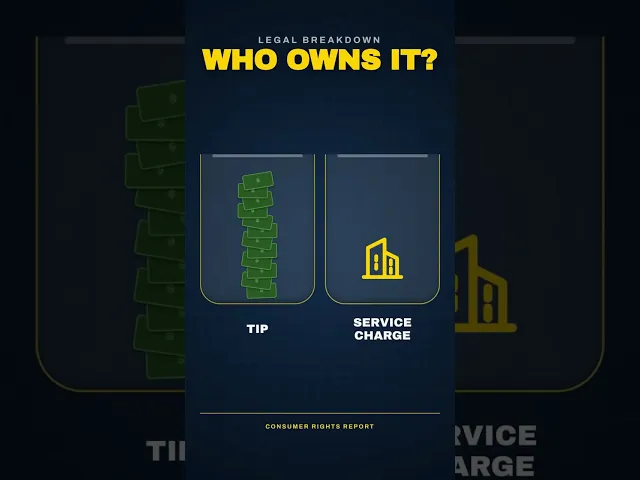
A mandatory service charge is not a gratuity by default and generally can't be distributed through a tip pool without a deliberate, disclosed classification decision.
California allows no tip credit against the minimum wage, and employers may not deduct credit card processing fees from employees' tips.
Who Can Be in a Tip Pool?
Every tipped employee sharing in a pool must be in the "chain of service" the customer bargained for, and the money must be distributed proportionally, typically based on hours worked. Owners, managers, and supervisors with authority to hire, fire, discipline, or direct other employees are excluded outright, regardless of job title. A "shift lead" with real supervisory authority doesn't escape this by title alone.
Why the DLSE and the Courts Don't Fully Agree
Here's the genuine tension worth understanding, because it directly affects restaurants and bars with back-of-house staff:
Courts have ruled that back-of-house employees can be included.
In Etheridge v. Reins International California, Inc. (2009), the Court of Appeal held that kitchen staff, bartenders, and dishwashers are still part of the "chain of service" and can lawfully participate in a mandatory tip pool.
The DLSE's own guidance hasn't caught up.
A 2005 DLSE opinion letter defined the chain of service narrowly to include waitpersons, bussers, bartenders, hostesses, wine stewards, and front-of-house chefs, without explicitly naming kitchen staff or dishwashers. That letter has never been formally updated to reflect Etheridge.
Courts will likely side with an employer who includes back-of-house staff based on Etheridge, but the state's own published guidance doesn't clearly endorse it either. Structuring your pool with this case as your documented basis rather than assuming the DLSE's older letter controls is the more defensible position.
Can a Supervisor Be Included in a Tip Pool?
Generally no, but there's one narrow, fact-specific exception worth knowing rather than relying on. In Chau v. Starbucks Corp. (2009), the court allowed a "shift supervisor" to be included in a tip pool because that person spent roughly 90% of their time performing the same barista work as everyone else, functioning as part of the team rather than as a true supervisory agent.
This wasn't a blanket rule that supervisors can share tips. It turned entirely on how the specific role actually operated day-to-day. Review any decision to include a supervisory title in your pool individually against actual job duties, not because Chau said it's safe.
What's the Difference Between a Tip and a Mandatory Service Charge?
This distinction matters more than most tip pooling guidance acknowledges, because it determines whether the money can even go through your tip pool in the first place. A gratuity is a discretionary amount the customer chooses to leave. A mandatory service charge, set by the business rather than the customer, is not, by default, a gratuity under California law. It belongs to the employer unless the business specifically chooses to distribute it to employees.
That means a mandatory service charge generally can't simply be run through your tip pool as if it were a gratuity without a deliberate, disclosed policy choice to treat it that way. We cover the full disclosure and classification framework in our guide on California's service charge rules and what employers may already owe, which is worth reading alongside this piece if your business uses both tips and service charges.
Watch: Can Your Business KEEP the Service Charge? - a direct breakdown of the "reasonable customer belief" test that determines whether a service charge is legally yours to keep or functions as a gratuity that must go to staff.
What Are the Penalties for Getting This Wrong?
Effective January 1, 2026, SB 648 gave the Labor Commissioner direct authority to investigate, cite, and fine employers who unlawfully withhold or delay gratuities. Previously, employees had to pursue a wage claim rather than trigger direct agency action. Beyond that citation authority, the underlying exposure hasn't changed:
Tips can never offset wages.
California doesn't allow a tip credit against minimum wage, unlike federal law and many other states. Every tipped employee is owed full minimum wage regardless of tips earned.
Employers can't deduct credit card processing fees from tips.
The cost of processing a tipped credit card transaction is a business expense the employer must absorb, not a deduction from the employee's gratuity.
PAGA exposure scales the same way it does for other wage claims.
A single ineligible participant in your pool, or a single misclassified service charge, applied consistently across a shift or location, affects every employee in that pool identically.
Auditing Your Current Tip Pool Before This Becomes a Claim
List every current participant and their actual duties. Anyone in the pool with real hiring, firing, or scheduling authority, regardless of what they're called.
Document your legal basis for including back-of-house staff, specifically citing Etheridge, rather than assuming inclusion is automatically safe or automatically prohibited.
Confirm your distribution method is proportional and consistently applied. A formula that changes shift to shift without documentation is exactly what a plaintiff's attorney looks for.
Verify your point-of-sale system isn't deducting credit card processing fees from tips before they reach the pool.
Separate service charge revenue from tip pool revenue unless you've made a clear, disclosed decision to treat a specific service charge as a distributed gratuity.
Confirm your gratuity payments are timely. SB 648's citation authority specifically targets withheld or late distributions, not just outright denial.
If your current policy hasn't been reviewed specifically against Etheridge and Chau, DefendMyBiz offers a free 15-minute consultation if a tip-pooling complaint or DLSE citation is already active. Book a call with our employer defense team today.
Conclusion
California permits mandatory tip pooling under Labor Code §351, but eligibility is where employers actually get sued. Courts have confirmed back-of-house staff can participate under Etheridge v. Reins International, even though the DLSE's own 2005 guidance hasn't been formally updated to reflect that holding. Separately, mandatory service charges aren't gratuities by default and generally can't be run through a tip pool without a deliberate, disclosed decision to treat them that way.
Document your eligibility decisions against the actual case law, not assumptions about who "obviously" belongs in a tip pool, and keep service charge revenue clearly separated from gratuity distribution unless you've made a specific, disclosed choice to combine them.
If you're facing a tip-pooling or service-charge dispute, DefendMyBiz offers a paid 1-hour consultation. Book a call with our employer defense team today.
Frequently Asked Questions
Is tip pooling legal in California?
Can back-of-house employees like cooks and dishwashers be in a tip pool?
Can a manager or supervisor ever share in tips?
Is a mandatory service charge the same as a tip in California?
What changed with SB 648 in 2026?
Disclaimer: The above content is for informational purposes only. This is not legal or tax advice. Laws, IRS guidance, and withholding requirements can change, and outcomes depend on specific facts. You are advised to contact a qualified attorney for any legal advice.


