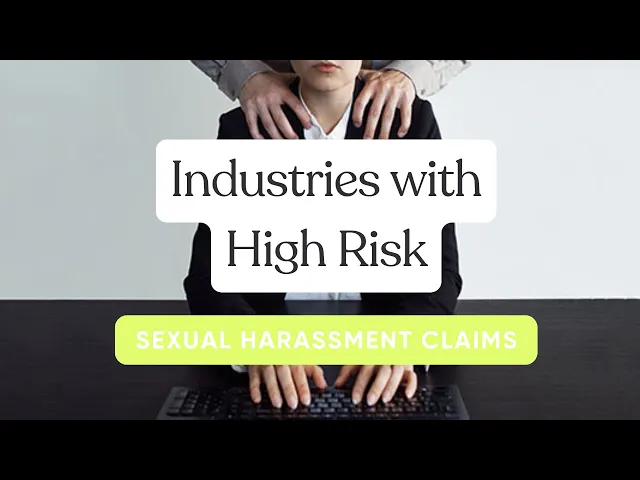
Sexual Harassment Claims Against California Employers: Know How the Defense Works
FEHA / EEO Defense

A harassment complaint is filed internally, with the California Civil Rights Department (CRD), or with the EEOC. Before you write a single word in response, before you schedule an all-hands meeting, before you call your general counsel who handles your contracts, you need a defense strategy. California's sexual harassment law under FEHA is structured differently from federal law in ways that consistently catch employers off guard.
This article covers the legal framework, what liability actually looks like depending on who committed the conduct, and what a defense that holds up requires.
How FEHA Defines Sexual Harassment
California's Fair Employment and Housing Act (FEHA) prohibits sexual harassment in two forms:
Quid pro quo: a supervisor conditions a job benefit (or threatens a job consequence) on a sexual demand
Hostile work environment: conduct severe or pervasive enough to alter the conditions of employment
FEHA discrimination provisions generally apply to employers with five or more employees. Its harassment provisions apply to all workplaces, regardless of size, and protect employees, applicants, unpaid interns, volunteers, contractors, and people providing services under contract.
One provision many employers overlook: FEHA also covers harassment by non-employee clients, vendors, and customers if the employer knew or should have known and failed to act.
If your industry involves significant customer or third-party contact, hospitality, healthcare, retail, entertainment, or tech, your harassment policy needs to address this explicitly.
John Fagerholm and the DefendMyBiz team break down exactly which industries see the most exposure here, in this video: 5 Industries with the Most Sexual Harassment Claims
Why California Employers Face Stricter Liability Than Federal Law
This is the legal reality most employers don't understand until they're already in litigation.
Under federal Title VII, employers defending supervisor harassment claims can invoke the Faragher-Ellerth affirmative defense: prove you had a reasonable anti-harassment policy, prove the employee unreasonably failed to use it, and you can eliminate liability entirely.
California rejected this defense. In Department of Health Services v. Superior Court, the California Supreme Court held that FEHA imposes strict liability on employers for supervisor harassment, with no Faragher-Ellerth escape hatch.
What California does allow instead: the doctrine of avoidable consequences. This limits damages. It does not eliminate liability. To use it, you must show:
A reasonable, accessible complaint procedure existed before the harassment occurred
The procedure was communicated to employees through training, written policy, and signed acknowledgments
The employee unreasonably failed to use those procedures before harm escalated
The liability structure by harasser type:
Who Harassed | Employer Liability Standard |
|---|---|
Supervisor | Strict liability (FEHA) |
Coworker | Knew or should have known + failed to act |
Non-employee (client, vendor) | Knew or should have known + failed to act |
Understanding FEHA's full defense service framework and where your documentation currently stands is the starting point of any realistic defense.
The 3-Year Window Most Employers Underestimate
AB 9 extended the time to file a FEHA administrative complaint with the CRD from 1 year to 3 years. Three years is a long time for:
Supervisors and witnesses to move on to other companies
Emails to be deleted on standard retention cycles
Performance documentation to thin out
The continuing violation doctrine to pull conduct from outside the window into the claim, if it's part of an established pattern
In FY 2023, EEOC sexual harassment charges rose to 7,732, up from 6,201 in FY 2022, and monetary recovery for sexual harassment claims was $60.6 million.
These numbers reflect what's on the other side of the table when a claim escalates to litigation.
The EFAA: A Federal Layer That Changes Arbitration Strategy
The Ending Forced Arbitration of Sexual Assault and Sexual Harassment Act (EFAA), effective March 3, 2022, voids pre-dispute mandatory arbitration agreements for sexual harassment and sexual assault claims at the employee's election. This is a federal law that applies in addition to FEHA.
What it means practically: an employee with a sexual harassment claim can opt out of your arbitration agreement and go straight to court, regardless of what the agreement says. Your existing arbitration clauses do not protect you the way they once did for this category of claim.
John Fagerholm, Managing Partner at DefendMyBiz, covers the employer implications directly in this video: Sexual Harassment Claims Covered Under EFAA
What the Defense Actually Requires – Step by Step
When a sexual harassment claim is filed, the first 72 hours can set the tone for everything that follows. Most employer mistakes happen here: the wrong people are notified, documents are touched, and statements are made without counsel.
The four steps below are parallel obligations that begin the moment the complaint is known.
Step 1: Litigation Hold Before Anything Els
The moment a complaint is made, internally or through a CRD/EEOC filing, issue a litigation hold immediately. Stop auto-delete functions on email. Preserve:
Performance records and disciplinary history for everyone involved
Timecards, schedules, and any records showing proximity or reporting relationships
HR notes, prior complaints, and investigation files
All communications between the accused and the complainant
Evidence spoliation, even if unintentional, is sanctionable, and courts treat it as evidence of bad faith.
Step 2: Run an Investigation That Survives Scrutiny
California regulations require employers to maintain a complaint process that provides timely responses, impartial, timely investigations by qualified personnel, documentation, remedial options, and timely closure.
Here is what "impartial" requires:
The investigator cannot sit in the reporting chain of either party
Witness interviews must be documented contemporaneously
Conclusions must rest on documented evidence, not on credibility preferences
Corrective action must be proportionate, consistent, and documented
Plaintiff's attorneys are familiar with the FEHA investigation standard. They will use your process against you if it falls short.
Step 3: Lock Down the Retaliation Risk
Between FY 2018 and FY 2021, 43.5% of EEOC sexual harassment charges were concurrently filed with a retaliation charge. Retaliation is often easier to prove than the underlying harassment claim, and it carries separate damages.
Once a complaint is made, every employment decision affecting the complainant, such as schedule changes, performance reviews, assignments, and discipline, is scrutinized for motive. Defense counsel needs to review these decisions before they're made, not after.
Step 4: Build the Avoidable Consequences Defense
California's avoidable consequences doctrine is your primary damage-limitation tool. To establish it:
The complaint procedure must have existed and been accessible before the harassment
Employees must have received it through training, signed acknowledgments, and posted notices
The investigation and corrective action must be documented as prompt and proportionate
A policy that exists on paper but isn't enforced in practice provides almost no protection in litigation.
DefendMyBiz's employer-only defense model means every step of the investigation and response process is structured with this defense in mind from day one. See how we approach FEHA and harassment defense.
For a direct look at the employer's legal obligation to prevent and respond to harassment, not just react to it, watch Employer Law: Protect Employees from Harassment
Training Requirements: What FEHA Actually Mandates
Missed training is one of the most common and preventable ways employers undermine their own defense. Under CA Gov. Code §12950.1, the requirements are:
Employee Type | Training Requirement |
|---|---|
Supervisors | 2 hours every 2 years |
Non-supervisory employees | 1 hour every 2 years |
New hires/newly promoted supervisors | Within 6 months of hire or promotion |
Seasonal/temporary employees | Within 30 days of hire or 100 hours worked, whichever comes first |
If you trained your employees in 2024, they are due for refresher training in 2026.
A missed cycle is direct evidence that the employer failed to take the reasonable preventive steps required under FEHA, and it substantially weakens the avoidable consequences defense.
Individual Supervisor Liability: Why It Complicates Defense
California Code Gov §12940(j) holds individual supervisors personally liable for their own harassment. This isn't theoretical.
Personal supervisor liability creates two compounding problems:
The supervisor has independent legal interests that may not align with the employer's defense strategy, creating friction in a unified defense
Plaintiffs name more defendants, which broadens financial exposure and can fracture settlement negotiations
When the accused is a supervisor or manager with decision-making authority over the complainant, the investigation must be attorney-directed from the start. This is not a situation for an internal HR investigation run in isolation.
If the termination of the harassing supervisor becomes necessary, how that termination is documented and executed affects both the harassment defense and any subsequent wrongful termination exposure.
See: How to Fire an Employee in California Without Getting Sued
Conclusion
A sexual harassment claim in California doesn't give employers room to respond slowly or internally. FEHA's strict liability for supervisor conduct, the three-year lookback window, the EFAA's arbitration carve-out, and the retaliation risk that attaches the moment a complaint is made all of it operates on compressed timelines.
The employers who manage these claims effectively are the ones who run a defensible investigation from day one and have defense counsel advising on every employment decision made while the claim is open.
If your business is facing a harassment complaint or you want to know whether your current policies, training records, and investigation procedures would hold up, DefendMyBiz is here to help. We represent California employers exclusively, and we'll give you a direct read on where your exposure is and what needs to happen next.
Book a 15-minute consultation or call at (818) 418-6625.
FAQs
Does a single incident qualify as sexual harassment under California law?
Does having an anti-harassment policy eliminate employer liability?
Can an employee sue for harassment by a vendor or customer?
What happens during a CRD investigation?
Can an employee bypass arbitration for a harassment claim?
Disclaimer: The above content is for informational purposes only. This is not legal or tax advice. Laws, IRS guidance, and withholding requirements can change, and outcomes depend on specific facts. You are advised to contact a qualified attorney for any legal advice.