
California Meal and Rest Break Violations: What the Premium Pay Penalty Actually Costs Employers
Wage & Hour Defense

If you're a California employer who just received a break-violation claim or wants to understand your exposure before one arrives, the number that matters is not just the per-violation penalty. It's that number multiplied across your workforce, extended over a three-year lookback, and potentially layered with PAGA liability.
Break violations are among the most litigated wage-and-hour issues in California. They compound fast and quietly. Read what the law requires, how the math actually works, and what a claim can realistically cost your business.
What the Law Actually Requires
Two statutes govern California's break obligations:
Labor Code § 512 - meal period requirements
Labor Code § 226.7 - premium pay owed when breaks aren't provided correctly
Meal periods:
Non-exempt employees working more than 5 hours are entitled to a 30-minute, unpaid, duty-free, uninterrupted meal period
The first meal period must begin before the end of the fifth hour, not at hour five
Employees working more than 10 hours are entitled to a second 30-minute meal period
"Duty-free" means fully relieved of all responsibilities. Requiring employees to remain on call, monitor equipment, or respond to messages constitutes an on-duty meal period. This must be paid and requires a separate written agreement under specific statutory criteria
Rest breaks:
One paid, uninterrupted 10-minute rest break for every four hours worked, or a major fraction thereof (meaning more than two hours)
Cannot be combined with a meal period or merged into a single longer break
Employers are required to provide compliant breaks, not merely make them available. But once a compliant break is genuinely provided and the employee chooses not to take it, liability does not automatically attach. The distinction matters, and so does the documentation.
Managing timekeeping and break records? See our related post: How to Track Employee Breaks in California and know what systems work, what to document, and how records either protect or expose you in a claim.
How the Premium Pay Penalty Is Calculated
For each workday an employer fails to provide a required meal period, the employer owes one additional hour of pay at the employee's regular rate of pay. The same applies to each missed rest break.
That's up to two penalty hours per employee per day, one for a meal violation, one for a rest break violation, on the same day.
Where employers miscalculate: the "regular rate of pay."
The California Supreme Court confirmed in Ferra v. Loews Hollywood Hotel, LLC, that break premiums must be paid at the employee's regular rate of pay, not just base hourly pay.
It includes:
Non-discretionary bonuses (production, attendance, safety)
Commission payments are averaged into the hourly rate for the relevant period
Shift differentials
For Example:
An employee earns $22/hour in base pay plus a $500 non-discretionary monthly bonus for up to 160 hours. Their regular rate is ($22 × 160 + $500) ÷ 160 = $25.13/hour. Each break violation premium is $25.13, not $22. Employers who calculate at base pay only are systematically underpaying the premium and creating a secondary liability.
At California's current state minimum wage of $16.90/hour (effective January 1, 2026), each missed break at minimum wage costs $16.90 per violation. For employees earning above minimum wage or receiving non-discretionary bonuses, the premium rises accordingly.
What the 3-Year Lookback Actually Costs
Employees have three years from each violation date to file a wage claim for unpaid break premiums under California Labor Code and four years if brought as an unfair business practice under Business and Professions Code § 17200.
Run the exposure calculation on a 20-person team, one daily meal break violation per employee, five days a week, at $22/hour average:
20 employees × 1 violation/day × 5 days/week × 52 weeks/year × 3 years = 15,600 violations 15,600 × $22 = $343,200 in premium pay alone
That's before attorneys' fees, waiting-time penalties under Labor Code § 203, or PAGA civil penalties, all of which can run concurrently. If both meal and rest break violations occur on the same days, exposure doubles. And if your workforce is larger or your hourly rates are higher, scale accordingly.
This is why individual breach-of-contract claims routinely become class-action triggers.
Not sure how much your break practices are actually costing you? John Fagerholm explains what 10-minute break violations cost California employers in real numbers in this video: Watch: How Much 10-Minute Breaks Can Cost Your Business
The Violations That Consistently Generate Claims
Most break violation exposure comes from operational habits, not intentional non-compliance:
Automatic meal period deductions. Payroll systems that deduct 30 minutes per shift regardless of whether a break was taken are a direct liability. Any pay period in which an employee worked through lunch without a valid waiver requires a corrective premium payment in the same pay period.
Late first meal periods. California courts have held that time records showing a missed, short, or late meal break create a rebuttable presumption of a violation. The employer bears the burden of rebuttal. A meal period that starts at 5 hours and 15 minutes is still a violation.
On-call rest breaks. If an employee must remain reachable during a rest break, by phone, radio, Slack, or any other channel, it's legally on duty. This applies equally to remote workers.
Manager-level pressure to skip breaks. A supervisor who verbally discourages breaks, even casually, creates employer liability that a compliant written policy alone won't defeat. Without documented enforcement, the policy may not protect you.
Combining rest and meal breaks. One 40-minute break does not satisfy either requirement. California law requires them to be provided separately.
Missing the second meal period on extended shifts. Shifts exceeding 10 hours require a second full meal period. Frequently overlooked in healthcare, construction, hospitality, and logistics.
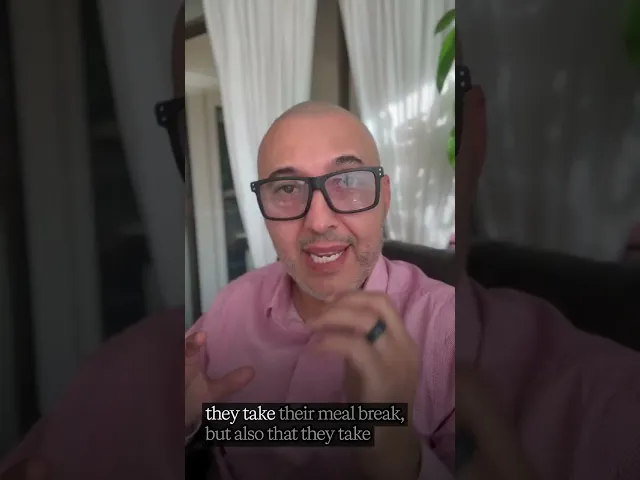
Quick question from employers: Can your employee refuse their meal break, and does that get you off the hook? John Fagerholm explains the answer and the documentation you need: Watch "Can My Employee Refuse Their Meal Breaks?"
Proactive Compliance: What Reduces Your Exposure Before a Claim Is Filed
The 2024 PAGA reforms make pre-notice compliance documentation worth real money, up to an 85% reduction in PAGA penalties if you can demonstrate reasonable steps before a notice arrives.
Disable automatic meal deductions. Or build a manual verification step for every shift where the deduction is applied.
Audit meal period start times quarterly. Pull a sample of time records and compare first break start times against shift start times. A pattern of breaks starting at or after hour five signals systemic exposure.
Train supervisors specifically. Verbal discouragement of breaks creates liability even in the face of a compliant written policy. Training needs to be dated, documented, and repeated when policies change.
Maintain and renew written waivers where applicable. On-duty meal period agreements must be individually signed, not buried in onboarding paperwork.
Recalculate your regular rate whenever the compensation structure changes. Adding bonuses, commissions, or shift differentials changes the premium pay obligation. Payroll systems don't update this automatically.
Document everything. The date of the audit, what was found, and what was corrected. Under PAGA reform, this paper trail is what separates a 15% penalty cap from a full exposure calculation.
Learn more about our Wage & Hour Defense practice and PAGA Defense approach.
Final Thoughts
The financial exposure from California break violations compounds across employees, pay periods, and years. A claim that looks manageable on the surface often carries PAGA or class action potential underneath, especially if the same practice affected your wider workforce.
DefendMyBiz represents California employers exclusively. We assess your real exposure, challenge the penalty math, and build a defense positioned around your actual records. If you've received a break violation complaint, a demand letter, or a PAGA notice, the window for strategic positioning is short.
Book a free 15-minute employer defense consultation or call (818) 418-6625.
FAQs
Does a verbal agreement with an employee to skip breaks protect the employer?
What if the employee chose to skip their break on their own?
What is the statute of limitations on break violation claims?
Can a single break violation claim become a class action?
Can the 2024 PAGA reforms reduce our exposure after we've already received a notice?
Disclaimer: The above content is for informational purposes only. This is not legal or tax advice. Laws, IRS guidance, and withholding requirements can change, and outcomes depend on specific facts. You are advised to contact a qualified attorney for any legal advice.