Strategic Defense Against California Minimum Wage Compliance Claims (2026)
Wage & Hour Defense
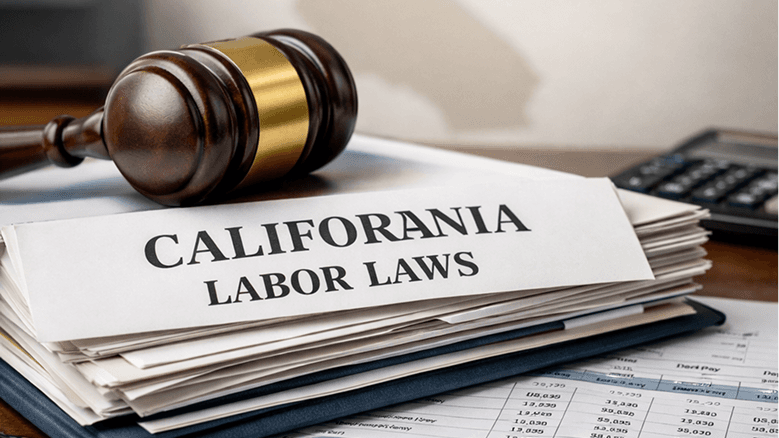
In 2026, California's minimum wage increased to $16.90 per hour. For a full-time employee, that's about $832 more per year in payroll costs. But here's the catch: that extra payroll cost is nothing compared to what you could pay if you are sued with a wage lawsuit.
This isn't just about following the rules anymore. It's about protecting your business from legal attacks. The $16.90 rate is just the entry fee. The real cost is in the California wage claim penalties, class action lawsuits and the attorneys' fees that can turn a $500 underpayment into a $50,000 settlement. Nonetheless, the one thing to help you is your litigation readiness to deal with it.
In 2026, California minimum wage compliance is not about avoiding mistakes; it's about ensuring that when claims arise, your documentation and defensive positioning makes the point for itself in court. This blog will exactly help you do that.
What Are California's Minimum Wage Requirements In 2026?
California's minimum wage threshold reached $16.90 per hour on January 1, 2026. This applies to all employers, big or small. Although there are exceptions where "learners" (new workers in training) can be paid 85% of the minimum wage for their first 160 hours, and some workers with disabilities may qualify for special licenses.
But note that if you have salaried employees who are exempt from overtime, they must now earn at least $70,304 per year (that's double the minimum wage for full-time work). If you miss this threshold, then you might have an expensive misclassification problem.
Gray Zones That Make Employers Vulnerable to Wage Claims
Most wage claims don't start with blatant theft, they start with blind spots. Here are the five places where California employers can get caught.
1.
Off-the-clock work that drops your effective pay rate
Off-the-clock work means any unpaid time employees spend on job tasks, like pre-shift setup (e.g., turning on computers or prepping tools), post-shift closing (e.g., cleaning up or locking doors), or remote logins outside scheduled hours.
Under Labor Code section 1194, you should pay at least the California minimum wage for all hours worked, including these extras. If off-the-clock time isn't paid, it can lower the employee's effective hourly rate below $16.90 statewide (or higher local rates), turning it into a minimum wage violation.
Employer Exposure: With the $16.90 rate, 15 minutes of off-the-clock work daily equals $1,032 per employee annually in unpaid wages before penalties. Multiply that by 50 employees and add SB 261's triple damages (after an unsatisfied judgment), and you're looking at $150,000+ of exposure.
2.
Failing to integrate bonuses into the effective hourly rate
If you pay bonuses, commissions, or shift differentials, they must be properly included in the employee’s total pay calculations. Under California Labor Code Section 1197, an employee’s total pay divided by all hours worked must equal at least the applicable California minimum wage.
If bonuses are calculated incorrectly, such as performance-based incentives, count toward wages, the employee’s effective hourly rate could fall below the required minimum.
Employer Exposure: This often comes up when quarterly bonuses aren’t included in the regular rate. If hours vary and the bonus isn’t allocated properly, overtime gets underpaid.
3.
Ignoring local wage ordinances
Cities and counties can set higher minimum wages than the state's $16.90, and you should pay the highest that applies based on where the work is done.
Employer Exposure: With more than 40 local minimum wage ordinances across California, employers should actively track the wage rate in every jurisdiction where their employees work.
For example, Pasadena’s minimum wage is $18.04, West Hollywood’s is $20.25, while the state rate is $16.90. If one payroll system processes employees in all three locations without adjusting for those differences, it might lead to class action claims.
4.
Employee misclassification leading to minimum wage shortfalls
To legally classify an employee as exempt in California, two requirements must be met. First, the employee must earn a fixed, guaranteed salary that meets the required minimum threshold. Second, the employee’s actual job duties must primarily involve executive, administrative, or professional responsibilities as defined by law. The job title alone does not determine exemption; what the employee actually does on a daily basis is what matters.
If either the salary requirement or the duties requirement is not satisfied, the employee is considered non-exempt. That means the employer should pay overtime, ensure minimum wage compliance, and follow all applicable wage-and-hour rules.
Employer Exposure: If an employer failed to adjust salaries as of January 1, any employee classified as “exempt” but earning less than that amount may now be misclassified.
Once misclassified, that employee is legally entitled to California minimum wage protections, overtime pay, waiting time penalties, attorney’s fees, and potential PAGA claims.
5.
Rounding and timekeeping errors that shortchange wages
California allows time rounding only if it is fair both in theory and in practice. In other words, the policy must balance out over time.
If your rounding system consistently benefits the company more than the employee, it is not lawful. The same applies to automatic 30-minute meal break deductions. You can only auto-deduct if the employee actually takes the full break every day. If the system deducts time when the employee was still working, you may have created a minimum wage violation.
Employer Exposure: Such mistakes can trigger penalties under Labor Code section 1197.1, which range from $100 to $250 per pay period.
These are not viewed as paperwork errors in the eyes of California law. They are treated as wage theft. The Labor Commissioner, employee attorneys, and PAGA representatives may see them as outright cost-saving practices, especially if the same issue occurs repeatedly across multiple employees.
California Wage Claim Penalties: What Violations Cost In 2026
A single underpaid hour can lead to mounting penalties that turn a $17 mistake into a five-figure liability.
1.
Liquidated damages (Double the wages)
Under Labor Code Section 1194.2, if you fail to pay the California minimum wage, you don't just owe the difference. You owe liquidated damages equal to the unpaid wages, effectively doubling the tab.
For example, if you underpay an employee $500 over six months, then you owe $500 in actual wages and $500 in liquidated damages, before any other penalties kick in.
The Good Faith Defense: Employers used to dodge liquidated damages by proving they acted in good faith with a reasonable belief they were paying correctly. But a recent ruling changed the game. Now the employer should prove they made a "reasonable attempt to determine the law," which means you should have enough documented legal review to prove you were right.
2.
SB 261: The 180-day triple-penalty
Starting January 1, 2026, Senate Bill 261 adds that if you lose a wage judgment and don't pay within 180 days after appeals expire, you might face:
Civil penalties up to 3x the outstanding judgment amount
Mandatory employee’s attorneys' fees
Successor liability
That’s how a $10,000 mistake could cost you around $55,000-$90,000.
3.
Waiting time penalties
When employment ends, California doesn't tolerate delayed final pay. Under Labor Code Sections 201-203:
Scenario | When final pay is due | Penalty (if delayed) |
|---|---|---|
Fired or laid off | Immediately (same day) | Daily wage × number of days late (up to 30 days) |
Quit within 72+ hours’ notice | On the last day of work | Daily wage × number of days late (up to 30 days) |
Quit without notice | Within 72 hours of quitting | Daily wage × number of days late (max 30 days; clock starts after 72 hours) |
This applies even if you only underpaid employees by $50 on their final check. The penalty is for the delay, not the amount owed.
4.
PAGA claims
The Private Attorneys General Act lets employees sue employers on behalf of the state for labor violations. For minimum wage failures, PAGA penalties can stack up to:
$100 per employee per pay period for initial violation
$200 per employee per pay period for subsequent/willful violations
5.
Labor commissioner citations
You don't need a lawsuit to get hit with penalties. The Labor Commissioner can cite you directly for violations.
SB 648 gives the Labor Commissioner authority to penalize tip and gratuity violations. The first violation can cost $100 per employee per pay period. While repeat violations increase to $250 per employee per pay period.
Pay stub mistakes can also become expensive. Under Labor Code Section 226, incorrect wage statements can cost $50 per employee for the first violation and $100 for later violations, up to $4,000 per employee. With 50 employees, paperwork errors alone could create up to $200,000 in legal exposure.
Defense Strategies To Deal With California Minimum Wage Compliance Claims
You’ve seen the penalties. Now here’s how to protect your business and stay compliant with California minimum wage laws:
Document your reasonable inquiry
Recent court rulings make one thing clear: employers must show they made a reasonable effort to understand and follow wage laws.
This means keeping dated records showing you reviewed the law before implementing any wage policies. Annual payroll audits, legal consultations for complex pay structures, written reviews before changing compensation models, and documented management discussions all help establish good faith.
Make your wage documentation transparent
Under California law, wage statements should clearly show hours worked, rates of pay, and total wages earned. If the information is incorrect, incomplete, or unclear, it can create legal risk for your business.
Your pay stubs should reflect the correct minimum wage (state or local), list all applicable hourly rates, and accurately show the number of hours worked at each rate. They should also be updated as soon as the wage rates change.
Clear and accurate wage statements help protect your business by reducing claims that employees were misled or underpaid.
Review piece-rate, commission, and bonus structures
Even if employees are paid through piece-rate, commission, or bonus structures, they must still earn at least minimum wage for every hour worked. Employers should review earnings every pay period to make sure total compensation meets or exceeds minimum wage based on total hours worked. It’s also important to track all working time accurately, including travel time, setup time, and waiting time etc.
Check for exemptions and union contracts
If you rely on a union agreement or classify someone as exempt, confirm their pay meets current legal minimum requirements. Union contracts don’t always override minimum wage laws.
If the salary falls below the required threshold, the exemption can fail, triggering overtime and other back pay liabilities.
Handle DLSE proceedings carefully
If you receive a notice from the DLSE, act quickly and carefully.
In some cases, you may want to challenge the citation, especially if the facts are unclear or you have strong records showing you followed the law. In other cases, settling early may reduce costs and prevent penalties from increasing.
Contain PAGA and class action risk
To reduce the risk of company-wide claims:
Audit payroll regularly
Correct discovered errors immediately
Pay back wages promptly with interest
Document corrective actions
Train managers on wage compliance
When employers can show that an error was isolated and corrected quickly, courts are more likely to limit broader exposure.
Prevent wage judgments from escalating
If a wage judgment is issued, don’t delay. Waiting can lead to higher penalties and added costs.
Mark all deadlines right away, review settlement options early, and avoid letting penalties build up over time. The longer you wait, the more expensive it can become.
Conclusion
California's minimum wage laws are tough, but not unbeatable. The employers who lose big are usually the ones who did nothing until the claim arrived. The ones who win are the ones who organized way before time.
You don't need a perfect payroll system. You don't need to predict every legal change. What you need is a paper trail that shows you kept proper records. That's your defensive shield against California’s minimum wage rules 2026. And it's completely doable for any business willing to spend a few hours on defense instead of scrambling after a claim.
The defensive mindset is actually liberating. Once you build your documentation habits: the annual audit, correct pay calculations, the timestamped reviews, you need not worry about surprise claims. Yes, the penalties are scary. But the path to protection is straightforward. And when something feels gray, consult your legal counsel before you act.
Ready to build your defense file?
Staring at the 2026 labor law changes and wondering where to start? Let's talk. Book a legal 1 hour consultation now, with DefendMyBiz’s expert team. Not because you're in trouble but because you're smart enough to keep out of it.
FAQs
What is the California minimum wage for 2026?
How can employers defend against California minimum wage compliance claims?
What is the Iloff v. LaPaille California ruling?
What's the "accord and satisfaction" escape hatch under SB 261 to avoid penalties?
Can an employee waive their right to minimum wage or agree to lower pay in California?
Disclaimer: The above content is for informational purposes only. This is not legal or tax advice. Laws, IRS guidance, and withholding requirements can change, and outcomes depend on specific facts. You are advised to contact a qualified attorney for any legal advice.